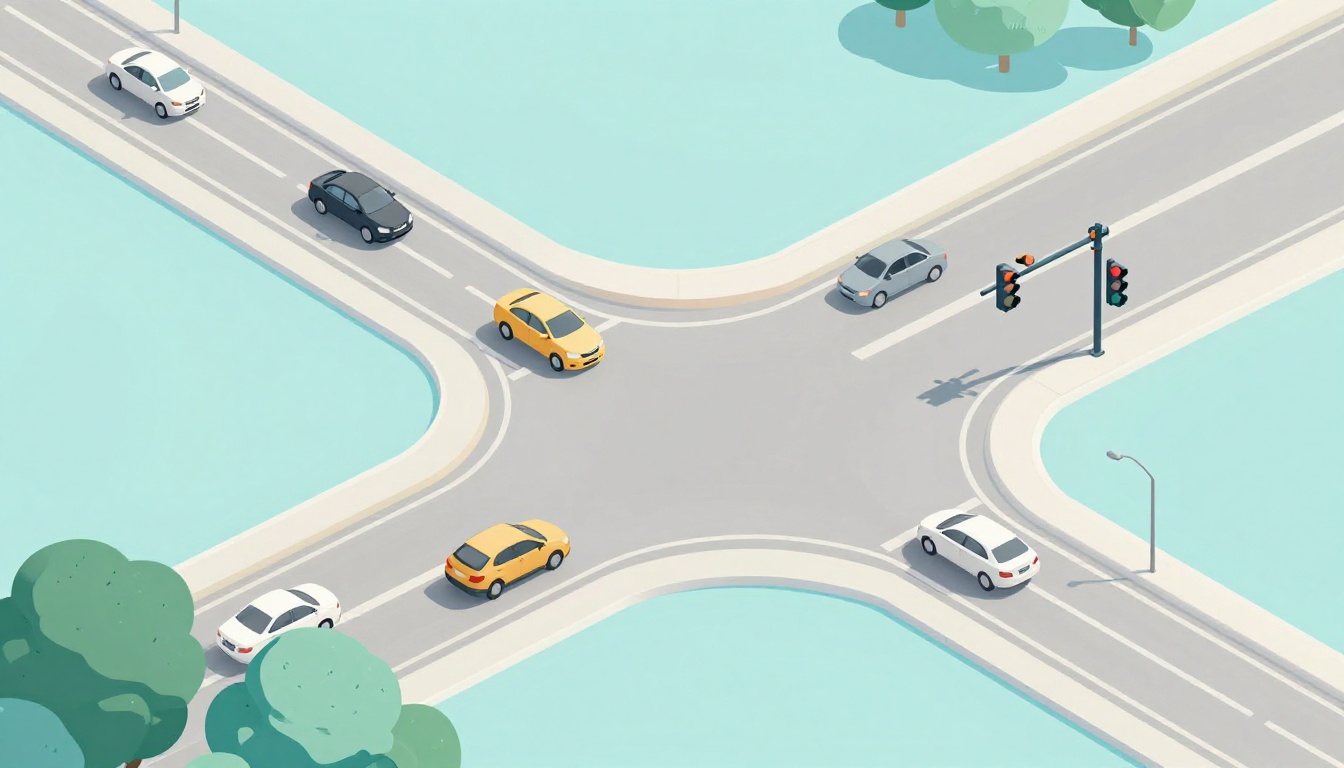
You know that feeling at a red light. You brake, you wait, you watch everyone else go, and you still don’t get moving fast. Now picture the same trip, but with a roundabout. Cars blend into a circle at low speeds, and most drivers keep rolling.
That one change is the core difference. Roundabouts keep traffic moving without lights. Traffic signals stop vehicles on purpose, then release them in turns. Because of that, roundabouts often handle more cars per hour and reduce crashes at the same intersections.
In the U.S., the safety numbers are hard to ignore. When agencies replace signals or stop signs with roundabouts, studies often find 35% to 47% fewer total crashes and 72% to 80% fewer injury crashes. On top of that, roundabouts can boost capacity by about 30% to 50% in many real settings.
Still, roundabouts are not a one-size-fits-all fix. Some tight urban areas need signal timing, especially when demand is extreme and intersection geometry is fixed. The goal here is simple: walk through how roundabouts work step by step, then compare safety, flow, costs, and environmental perks so you know when roundabouts make the most sense.
Step-by-Step: How to Navigate a Roundabout Like a Pro
A roundabout is a circular intersection with a key rule: yield to traffic already in the circle. Most modern designs also avoid lane changes inside the circle. That’s why drivers plan early, then follow a steady path.
Drivers usually move counterclockwise around a central island. Speeds stay low, often under 25 mph, so gaps are shorter and decisions stay simpler.
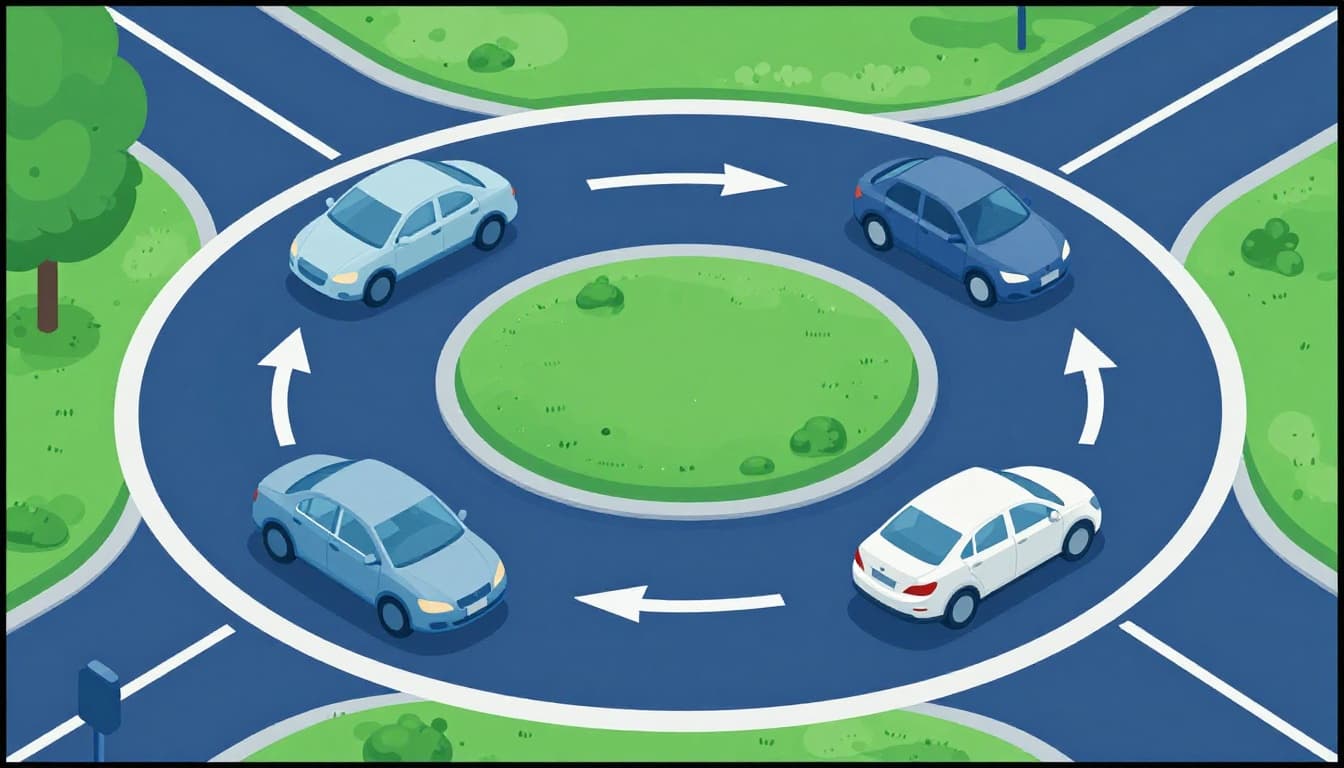
Before you enter, check three things: your lane, the yield line, and what’s happening in the circle. Then enter only when it’s your turn.
Here’s a simple cheat sheet for common turn movements:
| What you plan to do | Typical entry lane choice | What you signal | What you must yield |
|---|---|---|---|
| Right turn | Right lane | Signal right while exiting | Yield to circulating traffic and pedestrians |
| Go straight | Either lane (if available) | Signal right only when exiting | Yield to circulating traffic and pedestrians |
| Left turn (or U-turn, if allowed) | Left lane (where provided) | Signal left on approach, then right to exit | Yield to circulating traffic and pedestrians |
If the roundabout has multiple lanes, your lane choice matters. It’s also why lane arrows on the pavement show up before you reach the entry. If you need a refresher, this Caltrans step-by-step guide is a solid place to start: Caltrans step-by-step guide to driving.
Compared to signals, you’ll notice one big difference right away. A signal gives you a clear red or green pause. A roundabout asks you to watch and merge using gaps, so smooth driving depends on timing, not flashing lights.
Picking the Right Lane and Yielding Smartly
Think of a roundabout like a moving train track. You can’t “cut in line” once you’re on the track. You need to choose your route before the entrance point, then follow the circle.
Here’s what to do as you approach:
First, slow down early. Many crashes start when drivers enter too fast and try to decide too late.
Next, pick the lane that matches your plan:
- Right turns usually start from the right lane.
- Left turns and U-turns usually start from the left lane (if U-turns are allowed).
- Straight often allows either lane, but signs and arrows will tell you what’s permitted.
Then comes the real test: yielding to everyone in the circle. That includes the car you’re closest to, but it also includes cars further back that could reach the entry point next.
So what counts as “yielding”? You slow before the yield line and enter only when the driver in the circle has space and you have a safe gap. Also, don’t forget non-drivers. In many areas, pedestrians cross near entries. Bicyclists may also share the space at the edge of the roadway.
One extra tip: avoid lane hopping. If your lane choice is wrong, don’t try to fix it by changing lanes inside the circle. Instead, follow the lane you chose, then take the next exit if that’s allowed.
For a quick rules review, this plain-language driver guide can help you get the basics right: roundabout traffic rules and signaling.
Circulating and Exiting Without Drama
Once you’re inside the circle, your job gets easier. You’re not waiting for a light to change. You’re just maintaining your speed and scanning ahead.
Most of the time, the safest move is this: stay in your lane. Then keep your position so other drivers can predict your path. If everyone does that, the roundabout feels calm, even when traffic is busy.
Here’s the pattern to follow:
- Circulate smoothly at low speed.
- Watch for cars entering from the left side of most U.S. entry points.
- Look for pedestrians and cyclists near crosswalks.
- Signal your exit decision early.
Yes, you still signal. But the signal usually happens near the exit, not in the middle of the circle. For right exits, signal right as you approach your departure point. For left or U-turn paths, follow the local signage rules, then signal right when you’re exiting.
Also, don’t try to pass inside. Many designs discourage passing because the lanes are narrower and speeds are low. If you pass, you create conflict points that roundabouts are built to avoid.
Compared with traffic signals, roundabouts often cut the stop-start rhythm. At signals, you wait through full cycles. At roundabouts, you can keep moving if gaps open up. That difference sets up the safety and efficiency results we’ll cover next.
Safety Showdown: Fewer Crashes and Lives Saved
If roundabouts did nothing else, safety would still be their standout feature. The basic physics help explain why.
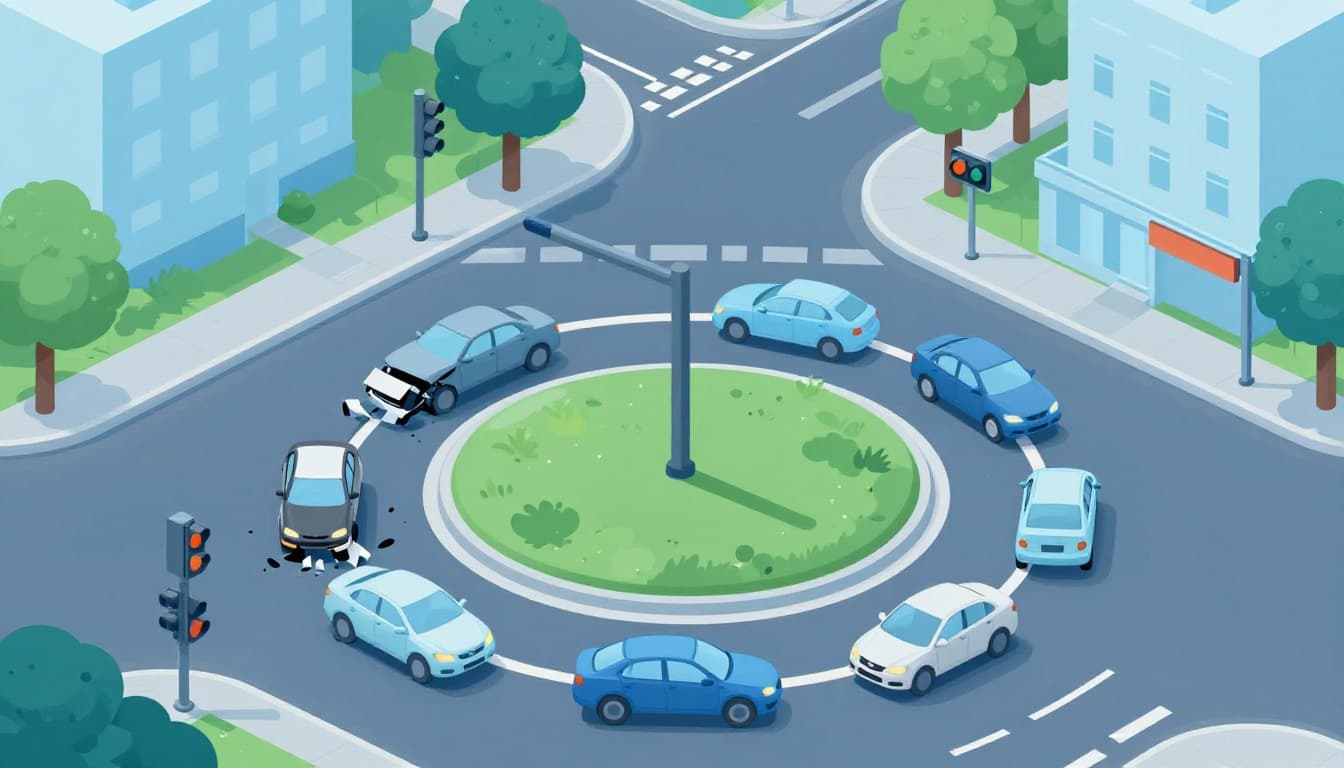
A signal intersection has many conflict points. Cars cross paths in multiple directions, and drivers often enter after a light changes. That creates a lot of “timing pressure,” plus the risk of red-light violations.
Roundabouts reduce conflict points and keep entering speeds lower. Cars also meet each other at angles that tend to be less severe than head-on or T-bone collisions.
When roundabouts replace signals or stop signs in the U.S., studies frequently find these drops:
- All crashes down 35% to 47%
- Injury crashes down 72% to 80%
- Fatal and serious crashes often down about 78% to 82% (depending on site)
The Federal Highway Administration (FHWA) summarizes findings like these in an evidence review. If you want the source material, start here: FHWA review of severe crashes at roundabouts.
Here’s a simple snapshot of what the data typically show:
| Crash outcome | Roundabout results vs signals/stops |
|---|---|
| All crashes | 35% to 47% lower in many studies |
| Injury crashes | 72% to 80% lower in many studies |
| Fatal and serious | Often 78% to 82% lower (site-dependent) |
Of course, crash patterns still exist. Most roundabout crashes involve run-off-road events, rear-end hits, sideswipes, or driver mistakes at entry and exit. Those usually connect to high entry speeds, confusion in new drivers, or unclear signage.
Still, the overall direction is strong. Roundabouts make the “worst-case” crash types less likely.
The biggest safety win comes from slower speeds and fewer severe conflict types.
Real Stats from Recent U.S. Switches
Safety improvements don’t stay in spreadsheets. Agencies keep converting intersections because the results show up on the ground.
In Pennsylvania, PennDOT has continued pushing roundabout projects and sharing public education resources. For a recent example of that approach, see: PennDOT roundabouts for safety and traffic flow.
In 2026, planning and construction news across the U.S. also highlights why roundabouts keep spreading:
- Lucas County, Ohio adds new roundabouts at roads like Monclova and Albon, supported by safety-focused funding.
- Redmond, Oregon planned a new roundabout tied to the Veterans Way corridor, with phased road changes starting in March 2026.
- El Paso County, Colorado planned additional roundabout work as growth increases traffic demand.
Those projects don’t happen because signals are “bad.” They happen because roundabouts often fit the safety and operations goals at many intersections.
Also remember this: the first weeks can feel confusing for drivers who are new to the design. That’s normal. Agencies often improve clarity with education, better signing, and pavement marking updates.
The takeaway is simple. When agencies convert, they usually do it because the data points the same way: fewer serious injuries and smoother movement.
Faster Flow and Shorter Waits: Efficiency Edge
Efficiency is where you feel it as a driver. You don’t see “capacity” on your dashboard. But you feel it in your trip time.
Here’s the pattern. Traffic signals work by stopping traffic at set intervals. That helps when flows are uneven. However, it also creates queues. Long queues form during green-to-red transitions, plus during heavy left-turn periods.
Roundabouts work differently. Because drivers enter by yielding to circulating traffic, vehicles can often keep moving without full stops. As a result, queues can shrink, and average delays often drop.
In U.S. studies, roundabouts frequently cut delays by a wide range, commonly:
- 13% to 89% lower delays versus signals in many case studies
They also often boost throughput. In the best matches, roundabouts can handle about:
- 30% to 50% more vehicles per hour
To make that concrete, here’s how the studies usually compare:
| Performance factor | Roundabouts typically do better when compared to signals |
|---|---|
| Delay time | Often 13% to 93% lower (depends on traffic demand and design) |
| Stops and queues | Often 52% to 82% fewer |
| Throughput | Often 30% to 50% higher capacity |
That capacity boost doesn’t mean roundabouts never slow down. Instead, it means they can spread flow more evenly. When traffic peaks, roundabouts can admit vehicles in smaller gaps rather than waiting for a full signal phase.
Signals still have strengths. If you have a very high-volume multi-lane setup or special traffic patterns, signals can meter access in ways roundabouts cannot. But in many everyday intersections, roundabouts cut the “stop and go” loop.
Money and Planet Savers: Costs and Green Perks
Let’s talk about cost, because it’s part of why roundabouts keep winning bids. Upfront, roundabouts can cost more to build. But they also reduce ongoing spending.
On the money side, construction costs vary by site. One-lane roundabouts often land around the $1.2 million to $1.8 million range. Multi-lane projects can go higher.
However, roundabouts usually save on maintenance and electricity because they often do not rely on signal hardware, frequent signal repairs, or power-heavy signal timing equipment. Some agencies also report lower ongoing operational costs once the lights go away.
Then there’s fuel. Less idling usually means less fuel burned. Studies commonly find fuel use drops around 23% to 34% after signal-to-roundabout conversions.
Emissions can improve too. Many studies report reductions such as:
- CO2 roughly 23% to 46% lower
- CO roughly 33% lower
- NOx roughly 35% lower
The environment benefit comes from the same place as the comfort benefit. Drivers spend less time stopped, and they speed up less often.
One caution matters though. In rare heavy-traffic overload conditions, signals can sometimes “hold the line” and meter entry better. That means conversion decisions still depend on traffic counts, lane design, and local roadway goals.
Long-Term Dollars and Fuel Wins
Over time, the roundabout cost story tends to look better.
Signals require electrical systems, signal heads, communication lines, and ongoing maintenance. Roundabouts reduce the need for that recurring work. Also, when severe crashes drop, the hidden costs drop too, like emergency response and long-term medical impacts.
Fuel savings also compound. Even a modest daily reduction in fuel use becomes a big number across thousands of vehicles. In some busy corridors, studies show yearly fuel savings on the order of tens of thousands of gallons.
If you want a simple way to frame it, think of a roundabout like a plan for fewer “wasted moments” per trip. Those moments are idling, harsh braking, and repeated acceleration after queues. Less waste shows up in both the budget and the air.
Pros, Cons, and Real Conversions That Prove It
Roundabouts bring real benefits, but they come with tradeoffs. Here’s the honest balance sheet.
What drivers tend to like
- Fewer severe injuries because speeds stay low and conflict points drop.
- Less waiting because cars can keep moving when gaps open.
- Lower long-run operating costs because signals aren’t needed in most conversions.
- Better reliability during power issues, since roundabouts do not depend on signal timing.
What can be tough at first
- Space requirements mean not every intersection can fit a roundabout.
- Driver confusion can happen when pavement markings and signage are unclear.
- Pedestrian and cyclist design still must be handled well, especially at entries.
Here’s a compact comparison table:
| Category | Roundabouts | Traffic signals |
|---|---|---|
| Safety | Often large reductions in injury crashes | Can be safe with good timing, but conflict points stay high |
| Flow | Often shorter delays and fewer queues | Can create backups during phase changes |
| Cost | Higher build cost, often lower maintenance | Lower build cost, continued signal upkeep |
| Driver experience | Smooth once learned | Clear with lights, but stop-and-go repeats |
| Fit | Best when redesign is practical | Better when geometry or demand demands strict control |
When are signals better? Usually when the intersection has very complex lanes, extreme peak demand, or constraints that limit roundabout geometry. Even then, engineers may still add improvements to turning movements or pedestrian phases.
The encouraging part is this: each successful conversion becomes a better blueprint. As agencies train drivers and refine design details, roundabouts get easier to use and harder to dislike.
Conclusion
A traffic signal controls traffic by stopping it. A roundabout moves traffic by slowing it and blending it. That’s why roundabouts often deliver fewer injury crashes and shorter delays, plus smoother trips that don’t hinge on a red light.
The strongest takeaway is simple: roundabouts usually win most times, especially when agencies design them well and drivers learn the lane and yield rules. Signals still have a place, particularly where demand and geometry fit that model better.
Next time you hit a confusing intersection, ask yourself one question: would you rather wait for a light, or merge into a circle? If you want to be ready, practice the basics and watch for how your local road teams design entries and exits.