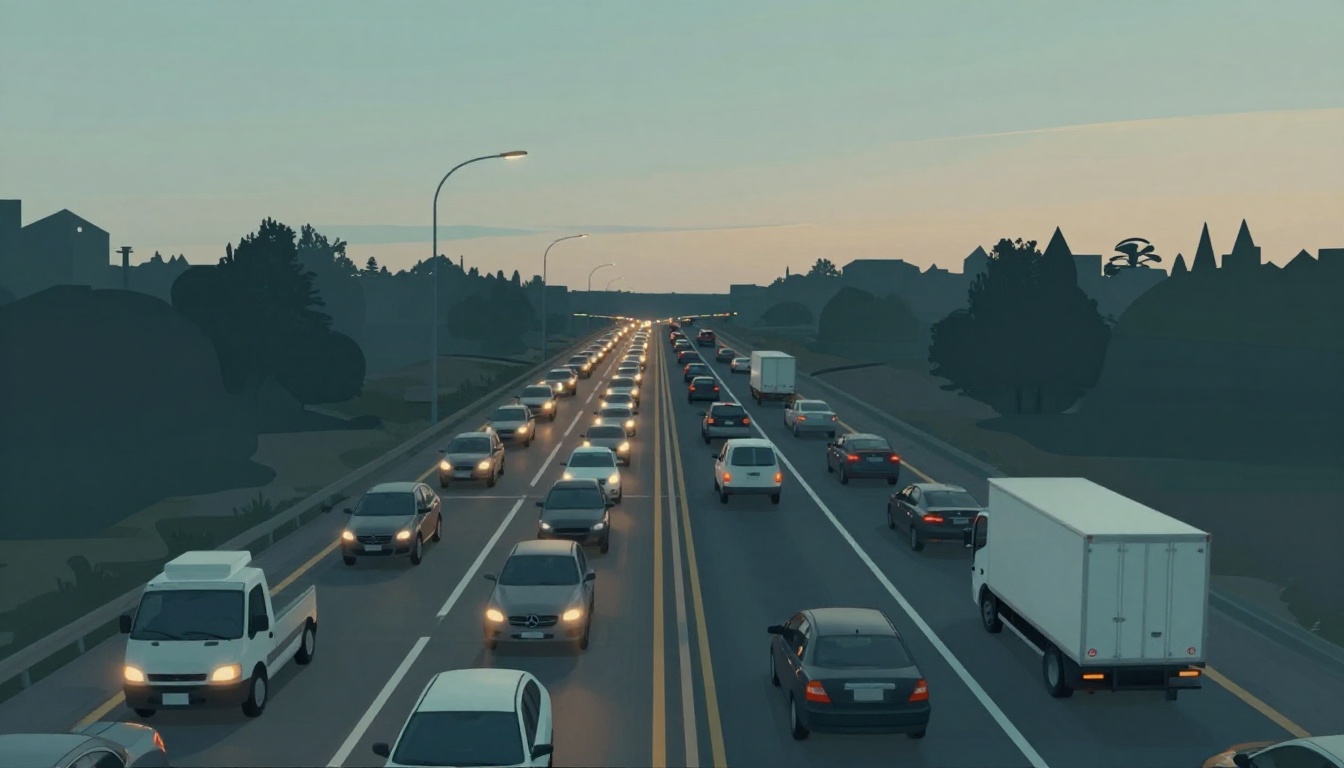
Sitting in traffic can steal hours from your week, and it adds stress you don’t need. In 2025, INRIX put the cost of traffic congestion in the US at least at $85.8 billion, tied to lost time and productivity for drivers. Even though 2026 national totals aren’t out yet, the pattern is clear, delays are getting more expensive.
You feel it most when the causes of traffic jams stack up at once. A crash, a lane closure, bad merging, or one slow bottleneck can snowball fast. Plus, newer issues like delivery trucks and freight activity can add stops and congestion where routes overlap.
Next, you’ll see the biggest causes behind traffic jams and practical ways to reduce traffic congestion for your daily drives.
The Real Reasons Traffic Grinds to a Halt in 2026
Traffic jams still feel sudden, but the biggest drivers of 2026 congestion are more “system problems” than one bad moment. When many small shifts stack up, roads lose their buffer, and delays spread across the whole day.
What looks like random slowdown usually has a pattern behind it: how people schedule trips, how roads handle crashes and work zones, and how freight and big vehicles eat up space.
Rush Hour Is No Longer Just Mornings and Evenings
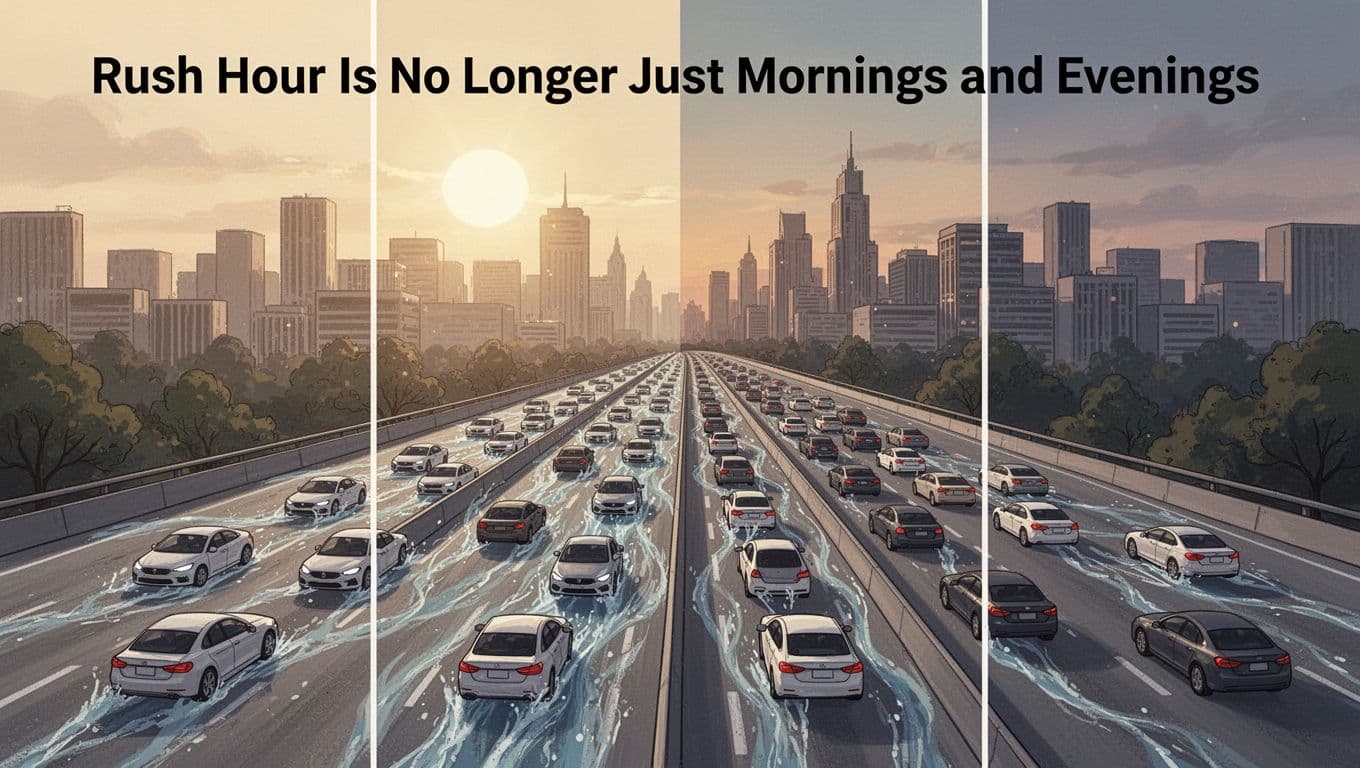
Work from home changed when people travel, not whether they travel. In many cities, commuters stopped driving to one fixed office schedule. As a result, the traffic peak flattened, then shifted, and now congestion shows up at odd hours. Instead of morning and evening spikes, you often see a steady load throughout the day.
Why does that matter? Because roadways work like a river. When traffic is low, the “current” flows. When too many cars show up at once, the river gets clogged. In 2026, flexible schedules act like constant debris in the water. You get frequent slowdowns, not just a few bad rush hours.
Here’s how that shift shows up for drivers:
- Midday jams grow because people run errands between meetings.
- Thursday delays often spike, since more people blend work trips with normal errands.
- Weekends get heavier as hybrid workers schedule family errands on “work-flex” days.
- Trips spread across more hours, so fewer lanes have a chance to fully recover between surges.
Urban growth also plays a role. More people live in or near big metro areas, and roads fill up faster than city budgets can expand lanes. Even when fewer people commute to offices every day, the total number of vehicles still rises, and the road has less slack.
If you want an example of how professionals explain this “hybrid work legacy,” ASCE pointed to hybrid work as a key factor behind traffic spreading across more hours of the week in 2026 reporting. See traffic jams and hybrid work in 2026.
Accidents and Construction: Sudden Blockages That Back Everything Up
Accidents are the classic trigger, but the 2026 reality is harsher: minor incidents can start a chain reaction. Most crashes come from human error, including speeding, distraction, and risky lane changes. In fact, safety reporting consistently finds a high share of crashes involve driver behavior, often cited around 94%.
Stress makes it worse. When drivers feel late, they tighten their gap, brake harder, and merge more aggressively. Then one collision or near-miss blocks a lane, and everything behind it slows down. People look, rubberneck, and hesitate. A road that already runs near capacity now has even less room.
Construction adds another layer. Work zones reduce capacity by narrowing lanes, shifting traffic, and changing merge points. Even if crews keep traffic moving, the flow becomes fragile. The highway behaves like a weakened zipper, and once it catches, the whole stretch struggles to open back up.
In 2026, you can expect delays to bunch up around:
- Lane drops and temporary barriers, which force merges into shorter gaps.
- Bridge and pavement work, which often targets high-volume routes.
- Interstate bottlenecks near major hubs, where detours are limited.
Also, construction slows freight. When trucks average lower speeds through zones, the line of traffic stretches longer. That means the “tail” of congestion lasts longer too.
Finally, tech helps, but it does not create extra lane capacity. Better signals, sensors, and real-time alerts can smooth timing, yet they cannot stop a blocked lane from turning into a long slowdown. When demand stays high, even good control systems hit their limits.
Delivery Boom and Big Vehicles Crowding the Roads
Traffic in 2026 is also crowded by a different mix of vehicles. Online shopping did not just add deliveries, it changed delivery timing. Lots of freight and last-mile trucks move throughout the day, including periods that used to be lighter.
Freight data points to a real shift. Since 2019, trucks have grown about 19%, while cars are closer to 10%. That gap matters because trucks take more space, accelerate differently, and create bigger gaps for safe following distances.
Meanwhile, bigger passenger vehicles do not help. SUVs often run wider and sit higher, so they take more effective lane space during merges and slowdowns. Rideshares add another crowding effect, since more vehicles circulate for pickups and drop-offs. Even if each ride feels “one car,” the system treats it like constant local traffic.
So what’s the 2026 trend drivers notice most? Congestion that feels thicker, slower, and harder to recover from. A truck lineup through a merge can extend the delay for everyone behind it, especially when roads already sit near peak demand.
You can see how this plays out on major corridors by looking at current trucking bottleneck reporting. For instance, ATRI updates and related trucking coverage highlight recurring pressure points that stay troublesome as freight volumes rise. If you want examples of where truck traffic pinches hardest, see top truck bottlenecks in the U.S. (ATRI update).
Bottom line: traffic jams in 2026 do not start only from one crash or one bad commute. They happen because road space, time schedules, and vehicle types have all shifted at once.
Smart Strategies That Cities Use to Clear the Roads Faster
Road congestion doesn’t get better by accident. In 2026, cities clear roads faster by treating travel time like a system they can manage. That means smarter control (signals and ramps), better choices (transit lanes and vans), and policies that reduce the worst spikes.
Think of it like tuning an orchestra. When lights, bus lanes, and ramp flow all play their parts, traffic stops fighting itself.
Tech Tools Like AI Lights and Apps Changing the Game
First, cities fix the “waiting problem” at intersections. Then they use apps to steer people toward options that keep moving.
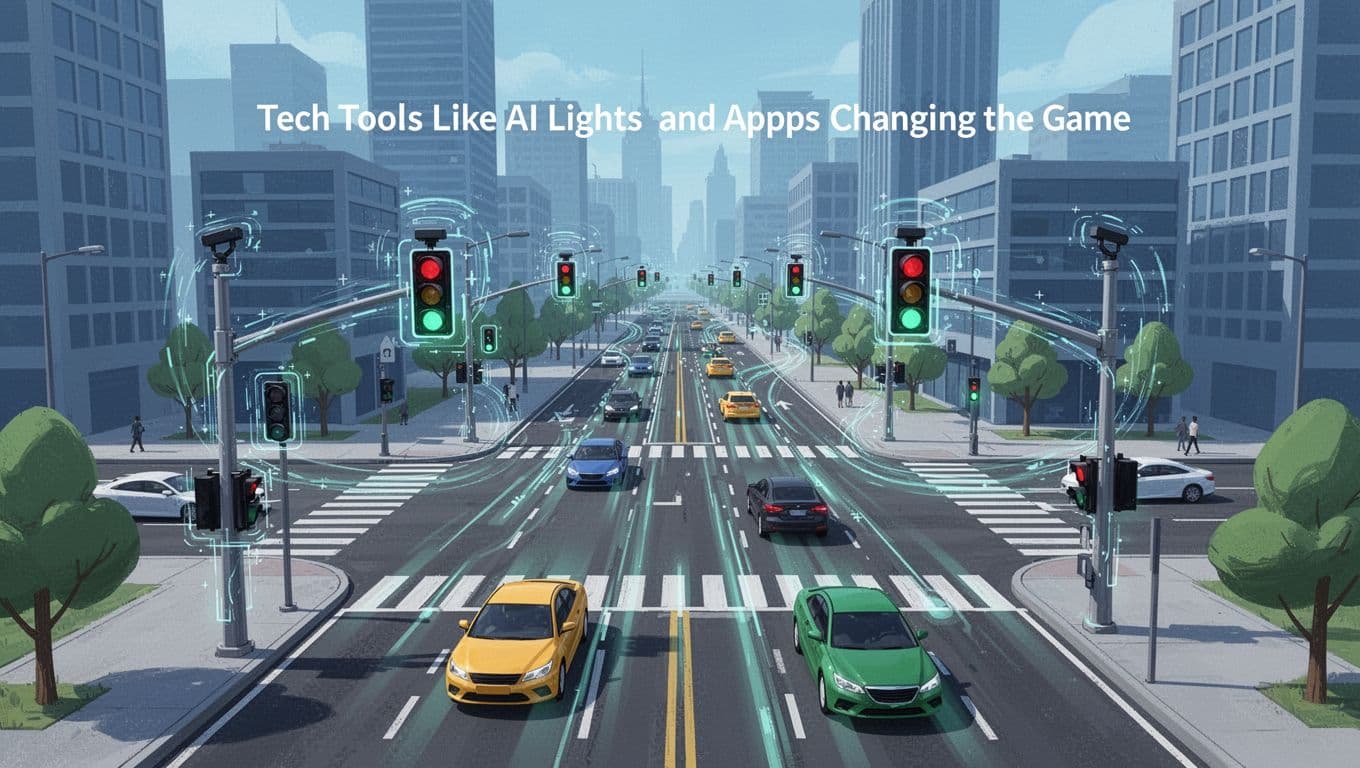
Adaptive signals (AI traffic lights) are a big part of 2026’s results. Instead of using one fixed timing plan, these systems watch real conditions through sensors and cameras. When queues grow on one approach, the system shifts green time to relieve the backlog, then it adapts again as traffic changes. The goal is simple: cut idle time and prevent stop-and-go waves.
In 2026, Los Angeles has continued operating ATSAC-like signal control that manages thousands of intersections. Reports tied to the system show about 32% fewer delays at intersections and lower emissions because vehicles spend less time idling. Pittsburgh’s Surtrac-style deployments also point to travel time drops, less idling, and meaningful emissions cuts across key corridors. You can see how this works in the real world with examples like Project Green Light in Boston, where the city focuses on reducing stops and delays using signal timing improvements.
Here is what adaptive systems change behind the scenes:
- They extend green when a corridor queues up, so traffic clears sooner.
- They shorten red when demand drops, so empty lanes do not waste time.
- They coordinate across multiple intersections, which prevents “red lights in a row.”
- They prioritize buses and other priority vehicles, so transit becomes a faster default.
Meanwhile, cities pair signal intelligence with faster incident detection. When cameras and sensors spot crashes or stalled vehicles earlier, operators can adjust timing plans sooner. That helps avoid the long tail of congestion after an incident, because traffic can keep flowing instead of bunching up for miles.
Apps add a second layer of help. Even if you stay in your car, route and mode apps can reduce friction by telling you where delays are forming, which exits are blocked, and which lanes usually move best. In 2026, that matters most during the “gray zone” of congestion, when the road is not fully jammed yet, but it is starting to slow. Getting drivers through the early phase can reduce the chance that traffic jams grow into gridlock.
In addition, some cities combine tech with policies that discourage peak flooding. For example, New York has used congestion pricing alongside smarter signal timing, aiming to reduce the number of vehicles entering the busiest areas and to improve safety at crossings. The public result looks like shorter, more reliable trips, not just fewer minutes of waiting.
The fastest congestion fix is often not a new lane. It’s fewer wasted seconds at the lights.
Finally, the tech effect is strongest when it targets the right locations. Cities get more value when they focus adaptive systems on corridors that already run near capacity, especially those with repeated merges, frequent crashes, or heavy transit demand.
Better Buses, Trains, and Lanes Getting Cars Off the Road
Tech keeps cars moving at the curbside. But to reduce traffic jams 2026 in a durable way, cities also shift travel demand. They do that by giving people bus and carpool options that feel better than driving alone.
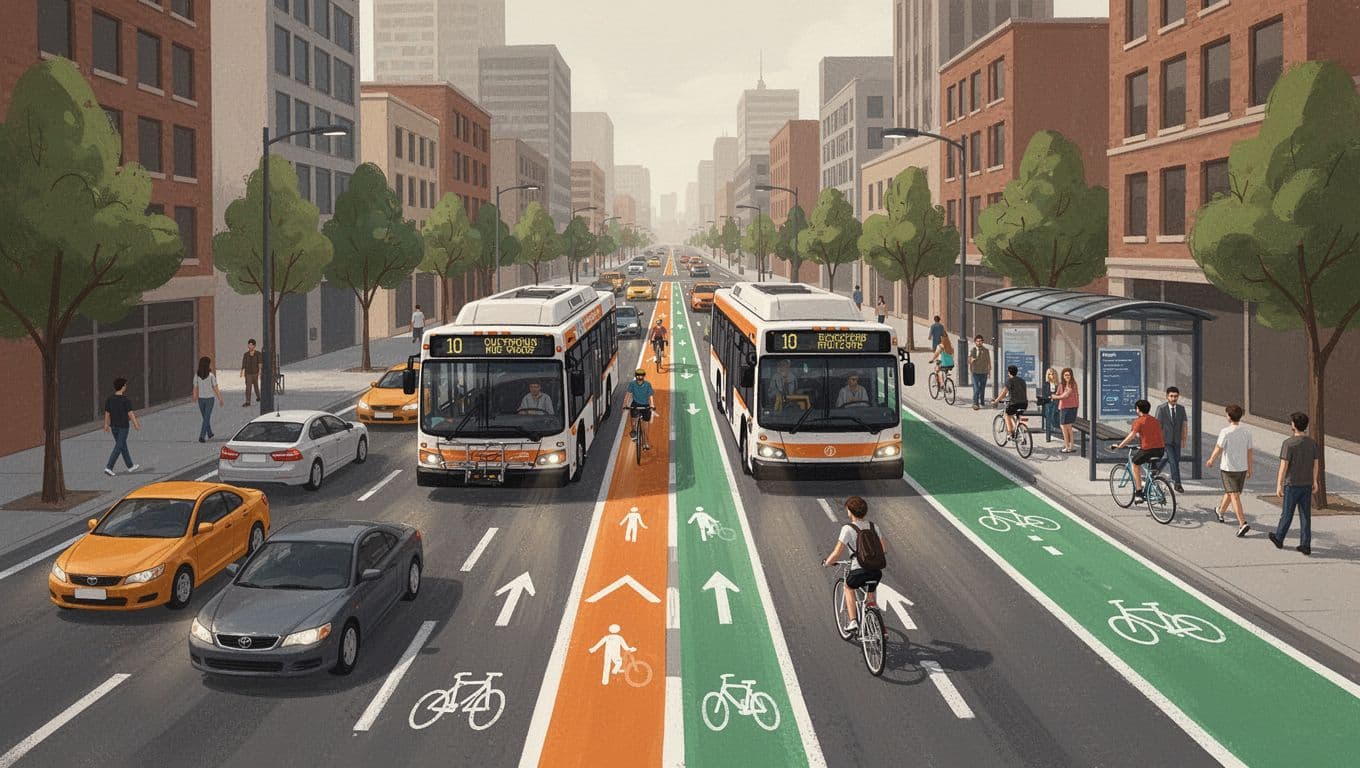
In practice, you will see dedicated lanes and high-frequency bus service on the busiest corridors. When a bus lane protects transit from general traffic, the bus stays on time. Then more riders choose it, which cuts the number of cars on the road.
Nashville offers a clear model. The city’s All-Access Corridors plan focuses on heavily traveled roadways and pairs strategically located dedicated transit lanes with smarter signals and high-frequency service. This combination matters. A bus lane without good signal timing still hits delays. Signal upgrades without lane priority still leaves buses trapped in general queues.
Augusta takes a different path that fits a different commute mix. Instead of relying only on buses, the city leans into vanpools through a ride-matching tool. The MYGCO app supports vanpools where riders share a vehicle for work trips, which keeps more cars off local streets. For drivers, it often feels like getting a normal commute without the stress of driving solo. For the road, it looks like fewer vehicles competing for the same bottleneck space. You can also see how Augusta approached congestion planning around major events in 2026 with coverage like Augusta’s traffic plan for Masters week, which shows how quickly changes in parking rules and traffic patterns can reduce surges.
When cities build multimodal options, they also make the choices easier to use. That includes safer pickup and drop-off points, better sidewalks to transit stops, and clearer routes for buses and bikes. Even when paths don’t remove congestion on their own, they support reliability and safety, which helps ridership stick.
Here’s why public transit improvements reduce traffic jams instead of just moving congestion around:
- Dedicated bus lanes protect schedule reliability, so more riders switch modes.
- Frequent service reduces waiting, which makes the bus feel “ready” when you are.
- Vanpools and carpools cut car count, especially on long commute corridors.
- Fewer cars means fewer merging fights, which reduces incident risk.
On top of that, these moves bring side benefits drivers feel every day. With fewer cars idling in traffic, you get less pollution and less heat-trapping emissions. Also, when buses and shared rides become faster, you gain more time back, not just fewer minutes saved on a map.
If you want to picture it, think of the road like a highway on-ramp for energy. When cities add lanes for high-occupancy travel and protect transit from congestion, they reduce the amount of energy wasted in slowdowns. Then the road works better for everyone, including people who still drive.
Everyday Habits to Dodge Jams and Arrive on Time
If traffic jams feel random, your daily routine is probably the missing variable. Small habits can change when you hit bottlenecks, how your trip spreads across the road network, and whether you contribute to stop-and-go waves.
One of the simplest habits to adopt is changing how you ride. Another is changing when you leave. Think of it like shifting your weight on a tightrope. One move can keep you steady when the road gets wobbly.
Team Up with Carpools or Go Solo-Free on Peak Days
Carpooling helps because it lowers the number of vehicles moving through the same choke points. In theory, that’s what HOV lanes are for: fewer cars, smoother flow, and faster trips for everyone. In practice, carpool rates in the US have declined a lot over the years, which means many HOV lanes end up underused. Still, when you use the lanes correctly (and on days they actually matter), it can be a real time-saver.
Here’s the key idea: apps and matching tools make carpooling easier than you think. Instead of guessing who has the same route, you can find riders with similar commutes and lock in a plan. Then, you show up with a simple rule: no solo driving on your busiest days. Even if you can’t carpool every trip, you can still use this habit as a pressure-release valve during peak periods.
To guide your expectations, look at what’s been happening with HOV lane performance. Recent analysis highlights that HOV lanes can underperform when carpooling declines, and some states have discussed converting HOV lanes to higher-occupancy toll (HOT) lanes to keep speeds up and avoid empty lanes. For a grounding view of why this shift matters, see why HOV lanes struggle as carpooling declines.

If you want a quick way to start, use a “one-week swap” plan:
- Pick one peak day (like Thursday or your usual worst commute).
- Set a matching goal, such as finding one regular rider or joining a short-lived pool.
- Plan your pick-up buffer (leave 5 to 10 minutes earlier so meetings do not become stress).
Also, remember this amplifies city efforts. When more people share rides, bus lanes stay reliable, intersection queues shrink, and incidents become less likely because traffic packs less tightly. Even if you only carpool a couple times per week, your habit works like a small domino that helps the whole chain fall better.
Want to go one step further? Use carpool options for long stretches, not just short hops. Shared rides shine most on commutes where a few extra cars can trigger a jam.
Conclusion
Traffic jams form when too many vehicles crowd limited road space, then a small disruption, like an accident or construction bottleneck, turns delay into a chain reaction. In 2026, hybrid work patterns and steady freight movement also add pressure, so congestion shows up more often and recovers more slowly. That’s why the “why” matters as much as the “when.”
The good news is that experts consistently point to one clear theme: no single fix works alone. Smart tech (like adaptive signals and earlier incident detection) helps smooth flow, while transit improvements pull riders off the road and reduce merging conflicts. At the same time, everyday carpooling habits can shrink the number of cars chasing the same chokepoints. Together, these moves protect capacity, cut stop-and-go waves, and help reduce traffic congestion without waiting for perfect conditions.
This week, pick one personal tip: try a shared-ride plan for a peak day, or choose a transit option for one trip. Also, support local transit improvements where you live, because reliable service is what makes people actually switch.
What would help you most right now, smarter routing, faster bus service, or more carpool options? Share your idea in the comments, and pass this post along to a driver who needs less time stuck in traffic.