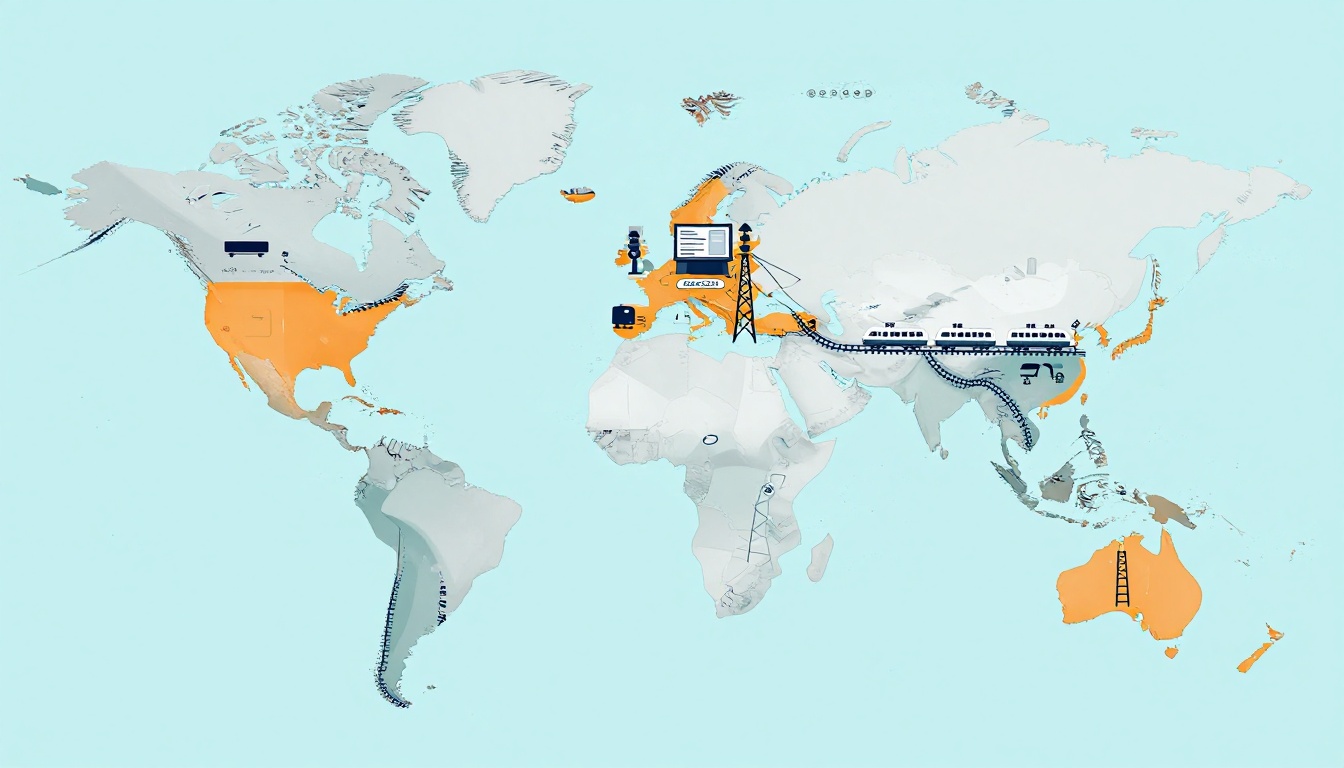
Train networks move people and freight across an astonishing 1.3 million kilometers of rail worldwide (about 2026). That scale means you can’t just lay track and hope for the best. Every country has to figure out who runs trains, who owns the network, and how safety rules stay consistent.
If you’ve ever dealt with delays, ticket confusion, or slow freight pickups, you’ve felt the impact of how a rail system is organized. Rail is complex because it mixes passenger service, freight operations, maintenance, and signals that must work together. And when governments and companies disagree on budgets or priorities, your ride or shipment can take the hit.
So how do major systems keep trains on time and moving safely, from dispatch centers to track crews? In the sections ahead, you’ll see how rail networks are structured, who the key players are, and how modern tech and safety processes work in day-to-day operations. Then we’ll cover the biggest challenges and 2026 trends that are reshaping rail planning and management.
The Main Types and Structures of Train Networks Around the World
Train networks come in a few clear patterns. You can think of them like different “arteries” in the body: some arteries push resources from remote mines, others move people and goods through dense cities, and others carry containers across long distances to reach ports.
Before we get into regions, it helps to understand one key idea. Rail systems usually form around a job that must get done. When the job is bulk freight in tough terrain, you get penetration lines. When the job is daily travel and frequent deliveries, you get regional networks. When the job is trade across continents, you get transcontinental corridors that connect to shipping.
Penetration Lines for Remote Hauling
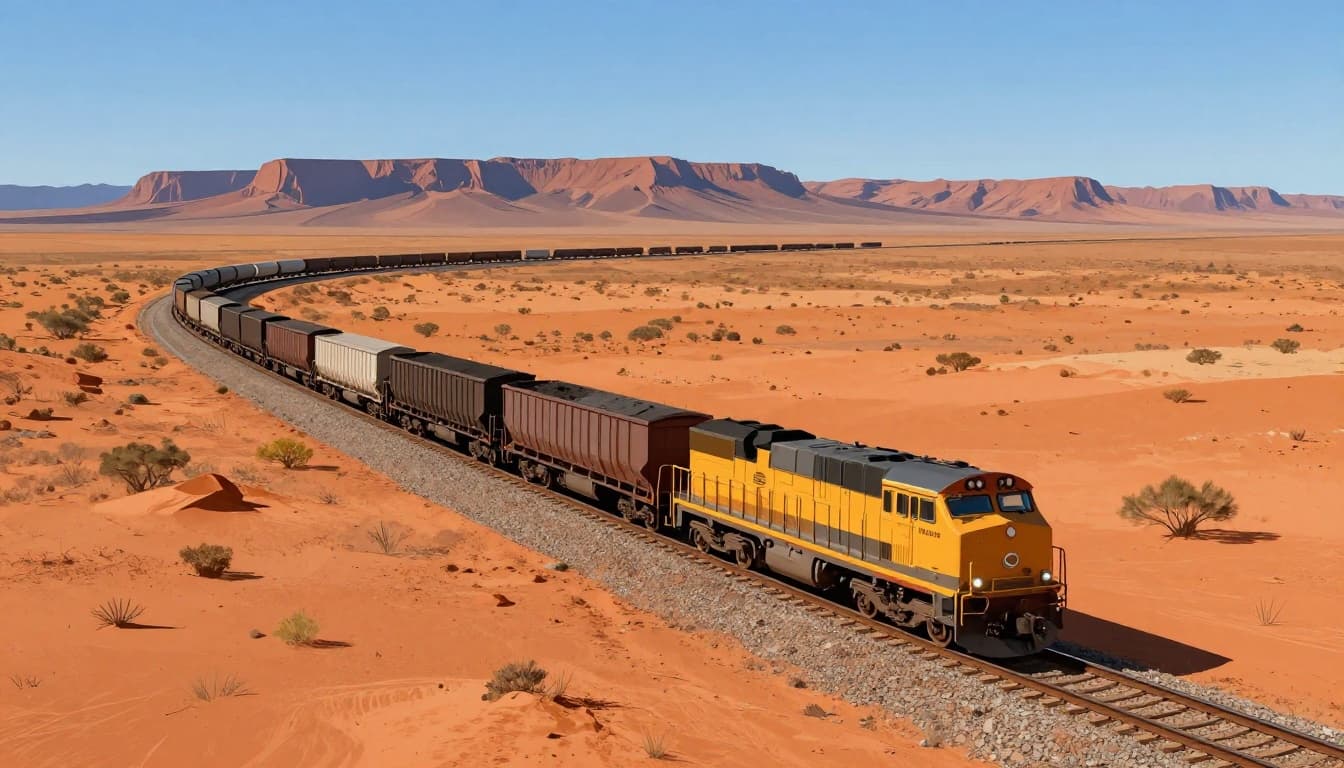
Penetration lines are rail routes that “reach into” remote areas. They usually exist to move coal, iron ore, minerals, timber, or grain from where the resource sits, to where ports or processing sites are located. Passengers may exist sometimes, but they are often limited, irregular, or secondary.
In places with low population density, a penetration line works like a mine’s supply pipe. It doesn’t need to serve many towns. It needs to carry heavy loads reliably, even when maintenance is costly and weather can be harsh. That often means simpler station patterns, long stretches of single track, and schedules built around loading and extraction cycles rather than commuter demand.
Australia shows this clearly in how rail ties to resource corridors. The country uses government-owned track in many regions, but private operators often run specific services tied to local industries. As a result, you’ll see freight-focused routes designed for long trains and steady throughput, not frequent passenger stops. For background on how Australia’s rail system reflects geography and planning choices, see rail transport in Australia.
Canada is another good example, especially in cold regions where resources drive long-distance logistics. Rail lines can extend toward remote communities and mining areas, then funnel product toward larger hubs. These projects often face major engineering challenges, such as permafrost, long distances without services, and the need for reliable fueling and maintenance.
One Alaska-Canada rail feasibility discussion also captures the logic of penetration lines, because it focuses on moving resources toward ports. The central theme is straightforward: if a mine or storage area sits far from existing freight routes, a new line can reduce haul time and improve logistics costs. You can see that framing in Alaska-Canada Rail Link feasibility materials.
Regional Networks in Bustling Areas
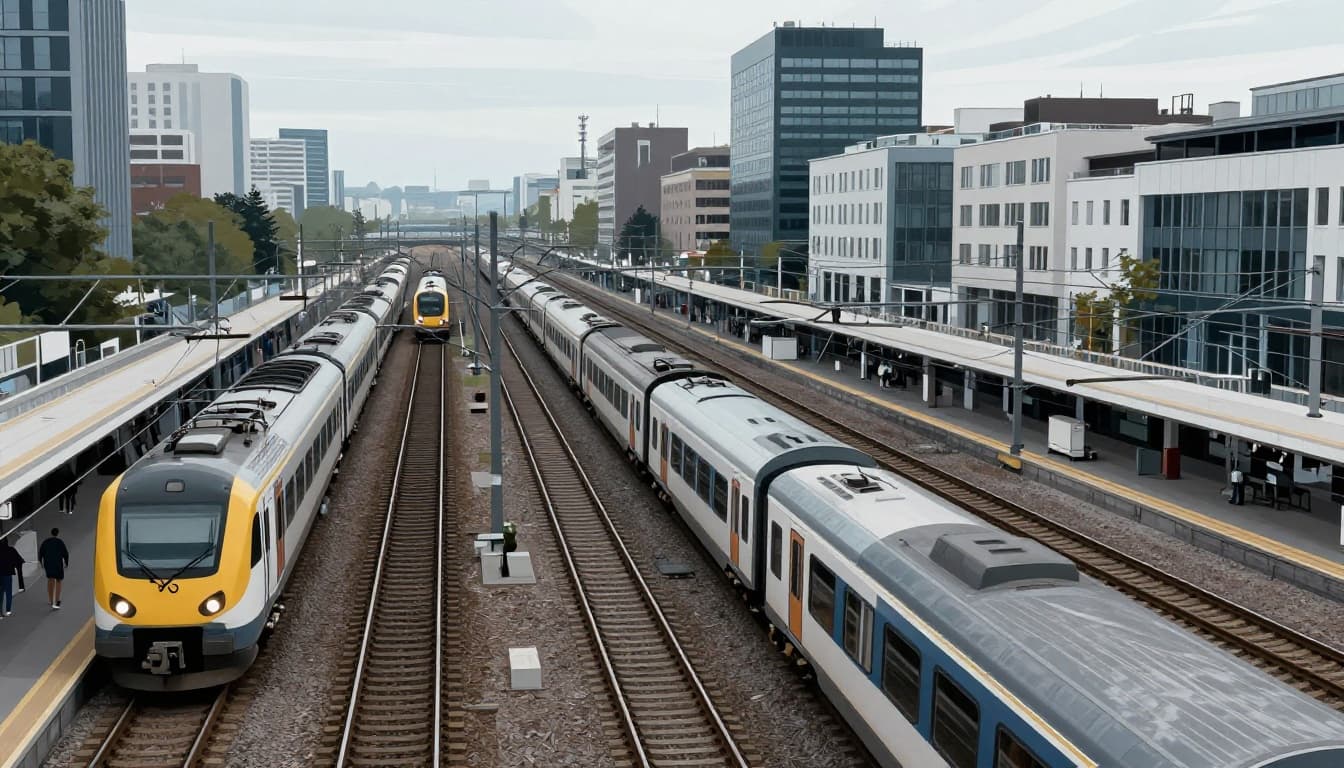
Regional rail networks form where people and companies create constant demand. Here, tracks connect many destinations in short to medium distances, so trains can run often, stop often, and adjust quickly. These networks mix passenger and freight work, and they rely on tight dispatching because multiple services share the same corridors.
Europe is a classic case of dense rail operations. Many countries build rail around city-to-city travel, then add commuter lines and freight routes over time. In practice, that means frequent passenger services on main lines, plus nighttime or off-peak freight paths when possible. The “shape” of the network looks like a web, with hubs in major cities and branching lines that feed them.
The Northeast United States works in a similar spirit, even though its history and operating patterns differ. The rail corridor along the Northeast Corridor supports high-frequency passenger service, and it also carries freight at times of day when capacity allows. This mix forces planners to treat train slots like valuable real estate. One late freight move can ripple through passenger schedules, so network rules and traffic management matter a lot.
Coastal China and Japan show how regional density grows around large metro areas. Coastal China has many corridors tied to major economic centers, and that concentration supports both commuter travel and high-volume logistics. Japan also operates extremely busy lines, supported by strong scheduling discipline and frequent service patterns.
India demonstrates the scale of daily train operations in a way that’s easy to picture. The country runs about 12,000 passenger trains each day, which means stations, signaling, crew shifts, and maintenance windows need to handle constant movement. Even if you never ride a long-distance service, the network still feels like a living system because it never really powers down.
When regional networks work well, they behave like a transit rhythm section. Passenger trains keep the beat on busy routes, freight trains fill in the notes for deliveries and industry, and dispatchers act like conductors. Meanwhile, infrastructure teams keep pace, because high frequency means even small failures can cause visible delays.
Transcontinental Links for Global Trade
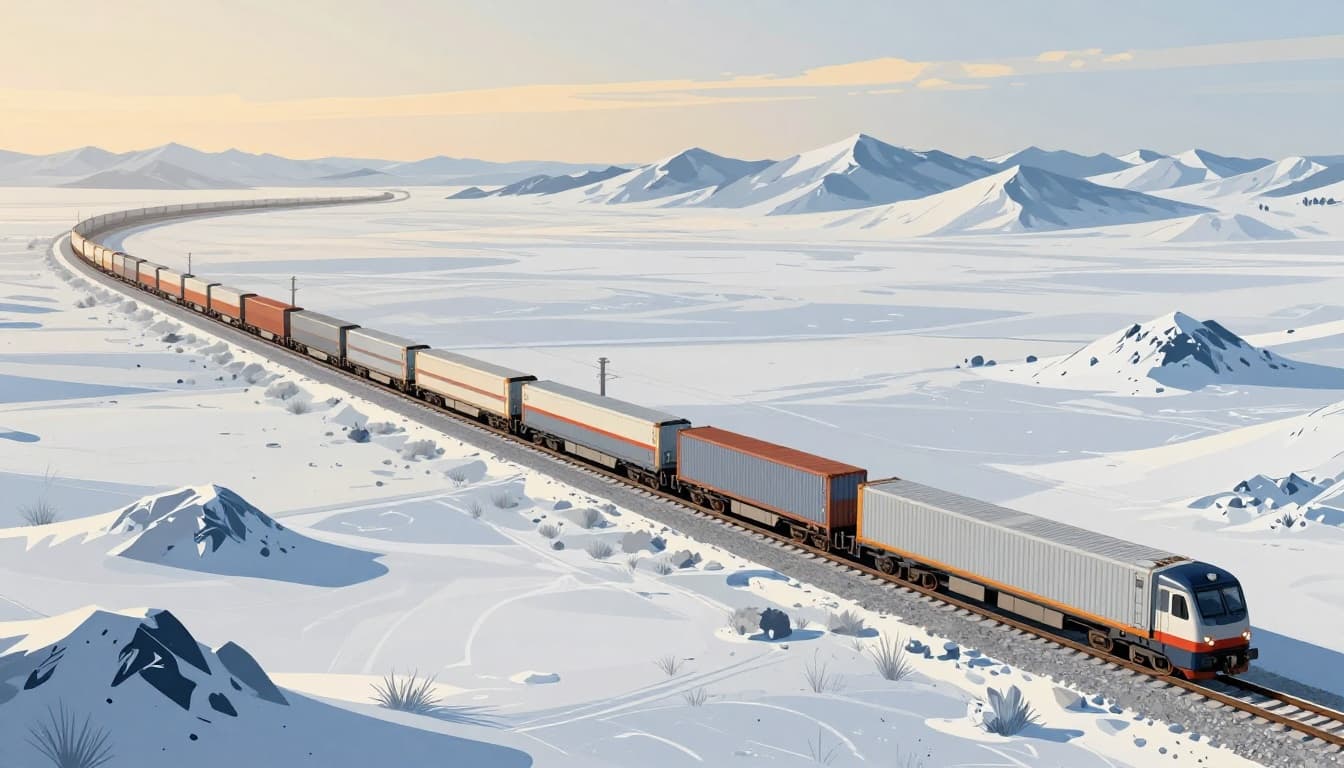
Transcontinental rail links are built for trade, not local travel. Their job is to move containers and high-value freight across very long distances, often to reach seaports. In many cases, these corridors connect inland production zones to shipping routes, so rail becomes the overland bridge in a larger supply chain.
A well-known example is the Eurasian Landbridge. In simple terms, it connects China and other parts of Asia to Europe by rail, then hands the cargo over to road and rail distribution on the European side. From there, containers can move onward to factories and warehouses. Compared with long sea routes, this landbridge can offer faster transit for certain cargo types.
What makes these networks “transcontinental” is their structure. They usually include:
- Border-crossing corridors designed for predictable customs and routing
- Port-facing connections so containers can transfer to ships
- Mainline segments engineered for long-distance throughput
In 2026, Eurasian Landbridge operations remain a key option for many shippers. The idea is not that rail always beats ships. Instead, rail wins when timing matters and when supply chain risk makes sea delays more costly. Rail Freight’s explainer on Eurasian transport corridors gives useful context for how these corridors function and where they run, including how networks compare across routes. See Eurasian transport corridors explained.
On a map, transcontinental corridors look straighter than regional networks. They prioritize through movement over frequent stops. Stations may exist, but they typically serve transfers, yard operations, and border processing, not passenger platforms every few miles.
North America has its own “landbridge” thinking too, though it’s shaped around East-West movement within the continent rather than Europe-Asia crossing. The North American Landbridge concept focuses on connecting major gateway coasts via rail corridors, with Canada and Mexico links as connectors. For a clear overview, check The North American Landbridge.
Meanwhile, investors and planners track how mode competitiveness shifts with policy and logistics conditions. Research on rail improvements across Trans-Eurasian networks also looks at how changes affect the trade-offs between rail and sea freight. If you want a study perspective, see mode competitiveness of Trans-Eurasian improvements.
In the real world, these three network types often overlap. A penetration line may feed a transcontinental corridor through a port. A regional network may handle freight that later becomes part of a long-haul container route. Still, the core structure stays recognizable, because it follows the same rule: rail design follows the type of demand.
Key Players Who Own and Operate Train Systems
Train networks run on a clear split of jobs. In most places, governments own the rails and major assets, while operators run the trains. That division shapes everything, from investment timelines to how quickly service problems get fixed.
Once you see the pattern, the world map makes more sense. You’ll find state-owned rail giants that do both ownership and day-to-day operation, especially in Asia and parts of Europe. You’ll also see private operators that focus on running services, usually on infrastructure managed by the public side. Meanwhile, suppliers and tech vendors help keep fleets and tracks reliable, often through maintenance platforms and long service networks.
A quick way to picture the landscape is this:
| Operator type | Who usually owns core infrastructure | What they focus on | Typical strength |
|---|---|---|---|
| State-owned operator | Often state (directly or via holding groups) | Running passenger and freight services at scale | Fast planning for national goals |
| Private operator | Infrastructure owner is usually public | Winning contracts, managing crews and assets, improving service | Cost discipline and service focus |
| Tech and maintenance supplier | Not an operator | Condition data, scheduling tools, repair support | Better upkeep, fewer surprises |
State-Owned Operators Leading the Way
In many countries, state-owned rail operators act like both manager and engine room. China, Russia, and India show the same core idea, just at different speeds and with different mixes of passenger and freight.
China Railway, often called China State Railway Group, is a good example of national scale. By the end of 2025, it had 165,000 km of total network and 50,400 km of high-speed rail. In daily life, that translates into massive coordination across stations, dispatch centers, and maintenance depots. Passenger demand also sits at huge volume, with nearly 4.26 billion passenger trips in 2025. When your system moves that many people, network management cannot be slow or optional.
Russia’s rail story centers on long distances and heavy freight loads. Russian Railways (RZD) operates a network of about 85,281 km (latest full data available). For early 2026, reporting showed freight volumes that stay very high month to month, while RZD also pushes projects meant to increase capacity and move more goods to the Far East. One practical approach includes repairing and upgrading track to support heavier trains and better speeds. That matters because a single bottleneck can turn into delays across thousands of miles.
India, meanwhile, is all about sheer daily movement. Indian Railways had about 69,439 route kilometers as of March 2025, and it plans to add 3,500 km in FY26. Even without quoting a single “one number” for passenger trips here, the broader reality stays the same: the network handles enormous daily use, so maintenance windows, signaling reliability, and rolling stock readiness shape customer experience.
What ties these countries together is how state-led structures support long-range planning. When the same entity coordinates large parts of the system, it can prioritize major projects across years, not just seasons. Still, it creates a different challenge: when budgets or targets tighten, the whole network feels it quickly. In other words, state-led operators can move big plans, but they must manage big risk too.
The biggest rail operators do not just run trains. They also keep the “plumbing” working under constant load.
Private Companies and Tech Suppliers
Private operators often come in where the system benefits from competition, specialized freight services, or contract-based performance. Even then, the pattern usually remains: the infrastructure role and the train-running role split. The rails might be owned and planned by public agencies, while private firms run trains under agreed service rules.
Australia is a clear example. Australia uses a mix of public and private involvement, and multiple private rail freight players operate on a national scale. For 2026, major private freight operators discussed in recent reporting include SCT Logistics, Southern Shorthaul Railroad, and Qube Logistics. Larger names like Aurizon and Pacific National typically take the spotlight because they handle huge freight volumes across states. In practice, that means private firms focus on day-to-day operational goals, like moving coal, containers, and bulk goods reliably, while also managing interfaces with ports, terminals, and rail infrastructure access.
So what does a supplier do in this setup? Think of suppliers like the mechanic shop behind the scenes. They don’t drive the truck, but they build the tools that keep it from breaking down. In Europe, Siemens Mobility provides digital rail maintenance solutions, including data-driven upkeep and tools that help plan when and how repairs happen. These tools support preventive checks and real-time condition monitoring, so maintenance teams can fix issues earlier.
Importantly, suppliers also bring service coverage. Siemens’ maintenance and support model includes a large field service network in Europe, commonly described as 650+ workshops. That kind of coverage matters because rail defects do not wait for a perfect schedule. When a problem pops up on a weekend or far from a main depot, rapid support can prevent a small issue from becoming a long outage.
For readers, the key takeaway is simple. Private companies often bring service focus and contract discipline. Suppliers bring maintenance intelligence and field support. Together, they help rail systems stay reliable even when demand spikes or weather hits.
Daily Operations, Safety Measures, and Smart Technologies
Real rail management feels less like a timetable and more like running a control tower in the middle of the day. Trains, crews, signals, and maintenance all move at once, so networks rely on strong daily routines and safety tools that never sleep.
At the same time, smart tech has started to change how railroads plan work. Instead of waiting for failures, many systems now watch conditions in real time and predict problems early. The result is less downtime, clearer decisions, and safer rides for passengers and crews.
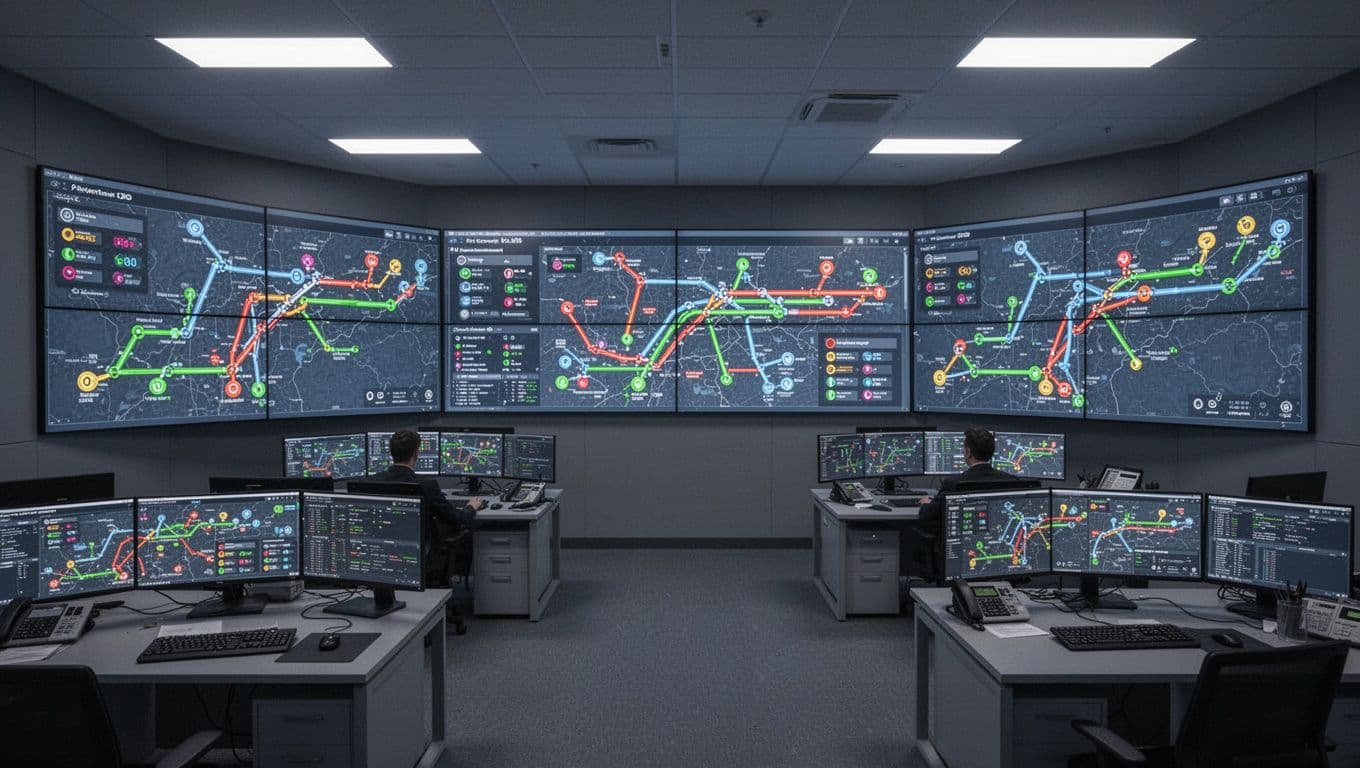
Control Centers Keeping Everything on Track
Control centers act like the brain of a rail network. They bring together real-time fleet tracking, live work status, and route-aware supervision, so dispatchers can react fast when the plan changes.
Most large systems rely on a mix of tracking methods. GPS helps centers see where a train or railcar sits on the map. In stations and yards, real-time locating systems can refine position when GPS reception is weak. Then software matches that position to the rail network layout, so the center knows not only location, but also what that location means for the route.
With that live view, control centers handle daily work in a few key ways:
- Real-time fleet tracking: Managers watch train positions, speed states, and stops. They also track equipment that supports service.
- Work orders in motion: Maintenance teams update tasks from the field. The control center sees what’s happening, where it is, and what it affects.
- GPS matching to workshops: When a railcar or unit needs attention, systems link its last known location to service depots. Then planners schedule pickup windows and repairs more accurately.
- Dispatch and disruption support: If a train gets delayed, the center can re-time connections and slot follow-on services.
This matters because rail runs on tight timing. A late freight train can steal capacity from passenger moves, which then forces cascading changes. Control centers reduce that “domino effect” by using live data to adjust earlier, not later.
If you want a concrete example of how companies package that idea, look at rail traffic control tooling like IVU.rail integrated rail control centre. It’s built to connect timetable planning, dispatch decisions, and disruption handling in one workflow, which is exactly how big operators try to keep crews and passengers informed.
In 2026, more centers also connect tracking data to maintenance intelligence. When the system spots unusual behavior, it can raise an alert for inspection. That helps crews fix small issues before they become service failures.
Safety Systems That Prevent Accidents
Safety systems are the last line of defense when something goes wrong. Still, they’re not just “backup brakes.” They work like a strict traffic cop that checks speed, route authority, and train movement rules continuously.
In Europe, many main lines rely on ETCS (European Train Control System). It is part of ERTMS, and it helps manage speed using cab signaling and track-side information. In the United States, rail operators use PTC (Positive Train Control). It aims to stop certain kinds of accidents by enforcing speed limits and preventing unsafe moves.
The big comparison comes down to design scope.
| Area | ETCS (Europe) | PTC (U.S.) |
|---|---|---|
| Where it helps most | Across networks and borders | On equipped U.S. routes |
| How it controls speed | Cab signaling supports continuous supervision | Enforces safe speed and movement rules on specific cases |
| Cross-border benefit | Built for mixed rolling stock and different operators | Limited to U.S. rules and infrastructure |
| Rollout reality | Gradual adoption alongside older systems | Coverage grows but still not universal |
Cross-border benefits matter for freight and passenger planning. When your network spans multiple countries, you want trains to follow one consistent logic. ETCS supports that goal because it’s built as a shared standard across European rail. As a result, cross-border travel can reduce delays linked to changing rules at borders.
In the U.S., PTC also improves safety, especially by reducing human error risks. It helps stop trains from exceeding allowed speeds or entering zones where movement should not happen. However, PTC’s influence stays largely within U.S. equipped territory, so cross-border standardization is not its focus.
If you’re comparing the “why” behind these systems, it helps to see how other analysis frames the gap. For example, PTC Implementation: It Could Be Worse explains how policy and rollout approaches can affect what safety tech delivers in practice.
Safety also depends on daily procedures, not only tech. Crews still follow signaling, operators still manage dispatch rules, and track teams still inspect infrastructure. Yet the control systems reduce the chance that a missed signal or a timing mistake turns into an accident.
Another point many people miss is how block signaling supports safe movement on busy lines. In block signaling, the track is divided into sections (blocks). Only one movement authority can exist in a block at a time. Therefore, when traffic rises, block rules help keep trains spaced, even when schedules get tight.
Tech Innovations Boosting Efficiency
Efficiency in rail is not just about speed. It’s also about fewer service interruptions, faster repair decisions, and better use of track capacity. That’s why today’s tech mix centers on cloud services, AI maintenance, high-speed rail expansion, and electrification.
Start with predictive maintenance. Instead of waiting for a failure, rail networks use sensor data to spot early warning signs. AI models then look for patterns that humans might not see in daily logs. Common targets include wheel issues, brake wear, track conditions, and pantograph health on electrified trains.
Research and surveys on AI predictive maintenance keep pointing to the same theme: machine learning works best when you feed it enough data from the rail asset, the environment, and the maintenance history. A useful overview is AI-enabled predictive maintenance survey, which discusses data sources, model types, and the real-world limits of forecasting.
Cloud platforms help this become practical at network scale. Data from trains, tracks, substations, and inspections flows into one place. Then teams can prioritize work across many locations, not just one depot at a time. Also, when fleets run in multiple regions, cloud systems support standard dashboards and faster coordination between operations and maintenance.
High-speed rail changes the math too. Higher speeds make timing tighter and failures more disruptive. So operators treat reliability as a design feature. They add better track monitoring, stronger maintenance planning, and train systems that support stable performance.
China gives a clear illustration of how these pieces combine. AI support for predictive maintenance and strong electrification upgrades go together with high-speed expansion. In addition, modern high-speed operations increasingly use smarter train control and automation patterns to improve energy use and reduce delays.
Finally, electrification provides both performance and maintenance benefits. Overhead power systems support consistent traction, and electrified networks often pair upgrades with better monitoring of power equipment. As a result, operators can plan repairs with more certainty, and trains can run with steadier performance.
Meanwhile, route optimization ties the whole picture together. Systems like ERTMS support how authority and movement logic work across routes, which helps planners run trains more tightly on busy corridors. When combined with real-time monitoring, it turns train control into a living feedback loop, not a static plan on paper.
For readers, the bottom line is simple: smart tech reduces guesswork. It helps crews spot trouble earlier, dispatchers protect schedule buffers, and maintenance teams plan work before it spills into peak hours.
Challenges Facing Train Networks and Exciting Trends Ahead
Rail networks run through countries like shared veins. When they work, they feel effortless. When they don’t, delays spread fast, safety takes more work, and costs climb behind the scenes.
This section looks at the biggest hurdles rail operators face right now, then points to the trends that are likely to shape day-to-day rail decisions in 2026.
Biggest Hurdles in Coordination and Upkeep
The first challenge is coordination, especially across borders and between different rail owners. Interoperability sounds technical, but it shows up in everyday pain points: freight stuck at a border node, passenger routes slowed by incompatible systems, and missed connections when a train cannot move smoothly into the next network.
A major cause is that rail systems still do not share one common “language.” Different networks can use different track gauges, signaling rules, and electrification standards. Sometimes the friction is physical, like changing bogies or waiting for transfer equipment. Other times it’s procedural, like crews needing different permissions and operating habits. You can see why this matters in cross-border gauge-change work, such as the push around gauge-changing technology for Ukraine’s cross-border freight. For context on how gauge-change solutions reduce that friction, see gauge-changing tech for cross-border freight.
Next comes aging infrastructure, which is less dramatic than new builds but more constant. Many rail assets sit in harsh conditions, from coastal corrosion to freeze-thaw cycles and heavy axle loads. Bridges, tunnels, track geometry, and communication systems all age. Then you add weather and peak demand, and small failures grow into timetable shocks.
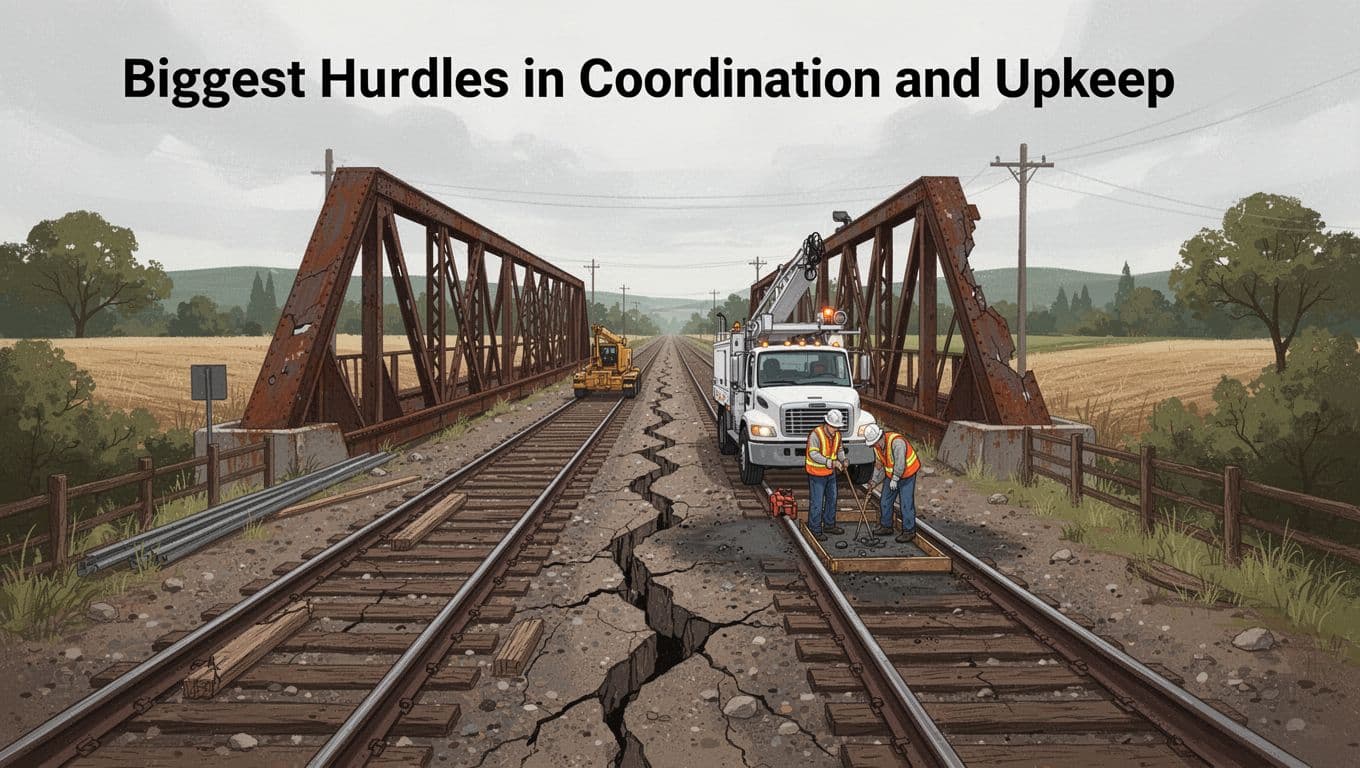
Maintenance is also a coordination problem. Upgrades often require taking sections out of service, which means planning windows, rerouting trains, and managing crew shifts. Even if the plan is solid, one unexpected failure can force a chain reaction across shared corridors.
Then there’s the cost issue, and it’s not just the price tag. Rail modernization competes with other budgets, and benefits can show up years later. Operators often need to spend on multiple layers at once, for example:
- Track and ballast renewal, because weak geometry limits speeds and safety margins
- Signals and communications, because outdated equipment blocks higher capacity
- Power upgrades, because heavier electric traction needs stronger substations
India illustrates how this plays out at national scale. The country keeps expanding and modernizing, including acceleration in infrastructure work and electrification progress. For a high-level snapshot of that modernization push, see Economic Survey 2026 railway infrastructure growth highlights. When you upgrade so much at once, you also inherit major project management risk, from material lead times to local disruptions.
Rural gaps add another layer. Many regions have little rail service, and the network becomes a patchwork of busy corridors and quiet branches. Even where rail exists, it may not offer frequent schedules or last-mile connections. As a result, road vehicles still fill the gap. The challenge then becomes both coverage and reliability, because building new lines is expensive and slow, while improving service on existing lines demands careful capacity planning.
High costs also hit rural and low-traffic routes first. When demand is thinner, rail planners face a hard math problem. They still must maintain safe infrastructure, but the cost per passenger or ton gets harder to justify. Some systems therefore pursue smarter maintenance strategies, using condition data to focus spending where it prevents the most failures.
Finally, sustainability goals create pressure, because rail networks must prove they can compete with roads in emissions and public appeal. Moving people and freight by train helps, but only when the network can run efficiently. That means reliable schedules, electrification, and power systems that can handle higher loads without instability.
The biggest rail challenge is not a single upgrade. It’s getting all the pieces to work together, while budgets and timelines stay realistic.
2026 Trends Shaping Smarter Rail Systems
In 2026, the rail world is leaning toward three kinds of change: more capacity, better decision-making, and cleaner power. If you think of a train network as a city, then these trends are the equivalent of adding new roads, improving traffic control, and switching to cleaner energy.
First, expansions are accelerating in both high-speed and freight corridors. China continues to expand high-speed links at scale, with thousands of kilometers added through the mid-decade plans. Meanwhile, India’s freight direction includes dedicated corridor thinking and stronger electric traction. The pattern is clear: operators build where demand is highest, then connect those corridors to wider networks so cargo and passengers can move with fewer transfers.
Second, digital and AI tools are becoming part of daily rail life, not just long-term research. Rail operators increasingly use digital signaling, real-time train tracking, and predictive maintenance systems. AI helps spot early failure patterns in wheel wear, brake issues, track conditions, and power equipment. It also helps maintenance teams choose the right repair window, rather than working from the “wait until it breaks” rule.
In many countries, this shift also connects to how safety and control work. Instead of treating signaling as a fixed system, operators modernize it so it can support more train density with fewer surprises. That includes migration paths from older systems to newer standards where possible.
Third, sustainability keeps moving from policy talk to equipment choices. Rail networks are pushing harder on electrification and cleaner power. They also focus on reducing energy use through better scheduling, steadier operations, and train control systems that reduce stop-and-go behavior. Put simply, if the network runs smoothly, it spends less energy.
Power upgrades sit at the center of this shift. Electrified trains need robust substations, better feeder lines, and stronger traction performance for steep grades and long hauls. In practice, upgrades often go hand in hand with rolling stock improvements, because high-power locomotives perform differently on stressed grid sections.
Safety standards and signaling upgrades are another major trend in 2026. Operators keep moving toward modern systems like ERTMS (and ETCS) in Europe and related approaches elsewhere. In the U.S., systems like PTC remain important, with attention on coverage, cybersecurity, and consistent behavior across operator boundaries. Digital control also matters for cross-network working, because the more rail systems share logic, the less time trains lose at the edges of each network.
One practical way to see where compatibility matters is to look at how gauge and infrastructure differences create friction. For a clear explanation of the core compatibility issues, see European rail gauge and interoperability. Even when countries improve signaling and control, rail still needs physical compatibility to fully benefit from new tech.
So what does this mean for riders and shippers? You usually get three outcomes. First, fewer cancellations caused by maintenance surprises. Second, stronger schedule reliability on busy corridors. Third, cleaner options for moving people and freight compared with road travel.
The future still has work ahead, but the direction is hopeful. Rail networks in 2026 are acting like living systems, where data guides upkeep and power upgrades support cleaner traction. As these trends spread, train networks keep moving toward a future that feels less like waiting, and more like trust.
Conclusion
Train networks get organized around the job they must do, so penetration lines, regional systems, and long-haul corridors each follow a different logic. Because networks also split by who controls the rails, and who runs the trains, management stays tied to ownership models and contract rules.
Across the day-to-day work, control centers, safety systems, and real-time tracking keep service from unraveling. Even then, rail still faces hard problems like aging assets and cross-border friction, so operators push tech and planning trends that improve reliability and cut risk.
If you want to spot those changes in real life, watch for updates in signaling upgrades, digital network planning, and new corridor work in 2026. Then share what you’ve seen from a commute, freight route, or rail station near you, what part felt smooth, and what part felt stuck?