Have you ever sat at a long red light, staring at the crosswalk like it will never change? When that wait feels endless, it’s easy to forget what traffic lights do behind the scenes.
The truth is, how traffic lights work is about more than colors. They guide drivers and pedestrians in a way that reduces conflict at intersections. They also help traffic move with less stopping and less surprise.
In this guide, you’ll see how traffic lights evolved over time. You’ll learn the parts that make them run, including the hidden “eyes” on the road. Then you’ll follow a full cycle, step by step, and see why the system matters for safety and everyday delays. You’ll also get a look at 2026 upgrades that aim to make signals smarter in real time.
From Gas Lamps to Smart Signals: A Quick History of Traffic Lights
Traffic lights didn’t start as red, yellow, and green. They started as a simple idea: control crossing times so people do not collide.
One early version appeared in London in the late 1800s, when officials used gas-powered devices to manage crowded street crossings. The goal was basic, but the impact was huge. Roads were getting busier, and chaos needed structure.
Over time, those early systems became more practical. Electric stoplights replaced gas signals in cities that needed brighter, more consistent control. In Utah, an electric stoplight helped prove the approach could work at real intersections, not just on paper.
Later improvements made signals easier to understand. Some designs used multiple lights and more complex layouts. A well-known milestone in the early 1900s was the move toward a standardized multi-color approach, which reduced confusion for drivers.
If you want a deeper timeline, this overview covers key early inventors and dates: who invented the first traffic light.
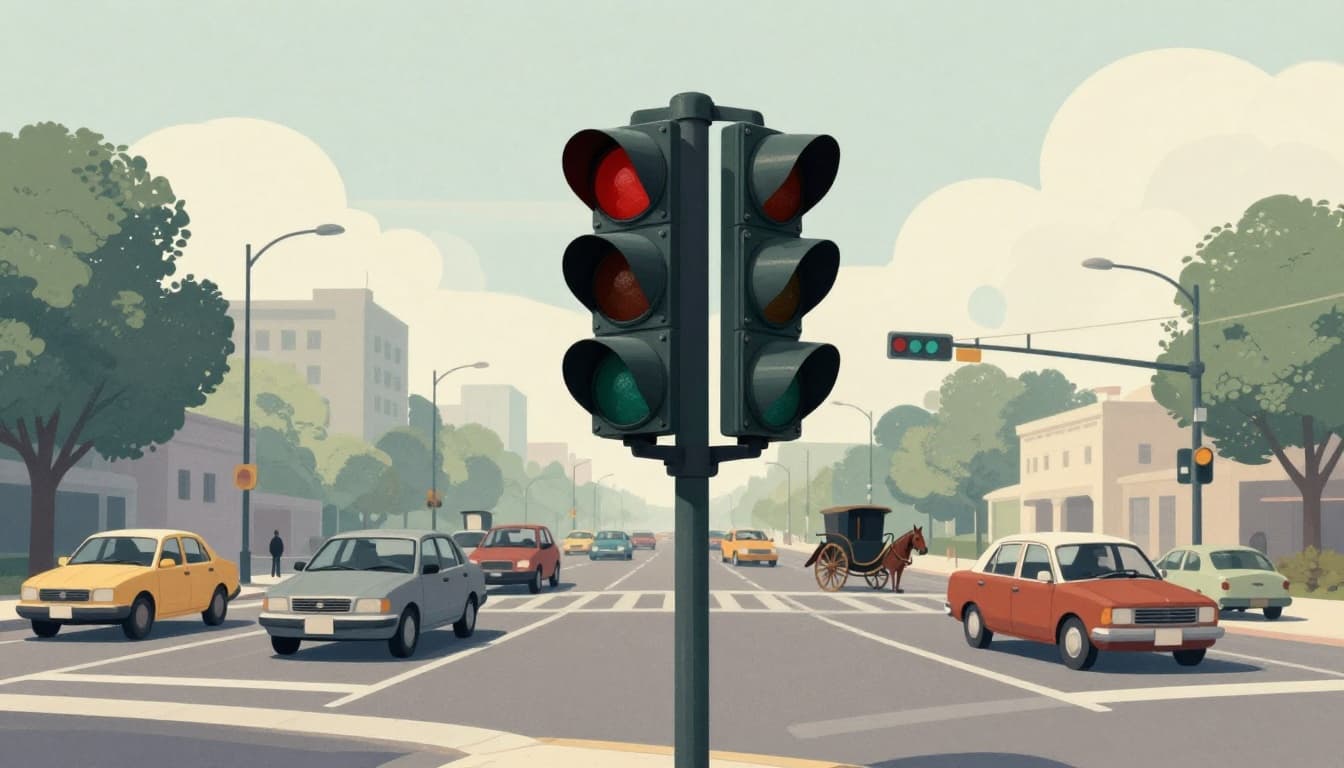
Another fun detail is how signals changed in response to real-world traffic. Some early lights used sensors or manual triggers. For example, there were horn-activated concepts that helped match signal changes to what drivers actually needed.
By the 1930s, standardization grew stronger. Standard meanings and layouts made intersections more predictable. That predictability helped safety, because drivers could react faster.
Then electronics took over. In the 1960s and beyond, controllers became more advanced, and timing could be managed with more precision. Instead of purely mechanical systems, cities used computer-based controllers to coordinate phases across intersections.
Today, many signals still rely on the same basic idea. Green means go, yellow means slow down, and red means stop. But the system behind those lights can include modern sensors, connected traffic centers, and adaptive timing. The colors are the visible part. The real story is the control system.
Breaking Down the Basics: Key Parts That Make Traffic Lights Tick
Think of a traffic light like a small team. The signal heads show the message. The sensors watch the road. The controller cabinet makes the decisions.
When all three parts work together, the intersection stays organized. When one part fails or gets misread, people feel it fast. You may notice long waits, unusual timing, or odd blank cycles.
Signal Heads: The Colors You Know and Trust
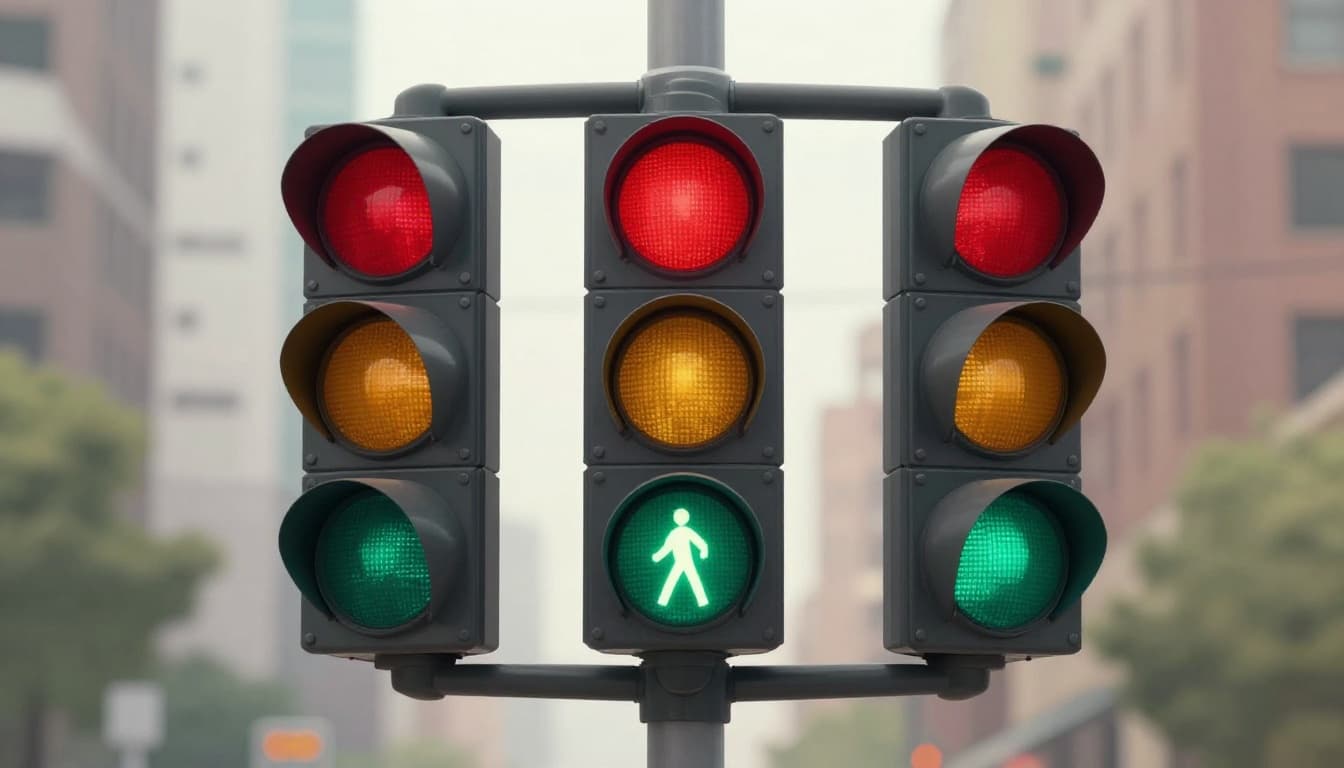
Signal heads are the part you see first. Most intersections use LED lights for red, yellow, and green. Many also show turn arrows, plus pedestrian signals.
Here’s what each one communicates:
- Red: stop. You should not enter the intersection.
- Yellow: caution. It warns you that the green phase is ending.
- Green: go if safe. Drivers and turners may move through based on the lane rules.
- Arrows: allow turns when the arrow is lit.
- Pedestrian signals: typically a “walk” symbol and a “don’t walk” symbol.
Modern LED heads are also built for weather and long life. They handle rain, heat, and winter conditions better than older bulb systems. Many intersections also use countdown timers for pedestrians or drivers. Those timers reduce uncertainty by showing time remaining.
Sensors: The Hidden Eyes Watching Every Car and Walker
Sensors are how the system “knows” what’s happening at the intersection. Without sensors, many lights run on fixed schedules, which can waste green time.
In the real world, vehicles arrive in different patterns. Pedestrians press buttons at different rates too. Sensors help the controller respond to that changing demand.
Common detection methods include:
- Inductive loops embedded in the road. When a car passes, metal changes the electrical signal.
- Cameras that detect vehicles, pedestrians, or lane movement using image analysis.
- Radar units that measure speed and presence.
- Magnets used in some older detection setups, often with special equipment near the roadway.
All of these sensors send “calls” to the controller cabinet. Those calls tell the controller where the queues are and when movement starts.
For a plain-language look at detection types, see how traffic light sensors work.
Controller Cabinets: The Smart Brain Calling the Shots
The controller cabinet is the brain. It coordinates timing so conflicting moves do not happen at once.
Inside the cabinet, a computer runs timing logic. It tracks which phase is active. It also manages safety checks, like making sure the intersection never shows two opposing movements at the same time.
Controllers often use pre-set timing plans for different parts of the day. Morning rush might prioritize commute flows. Late night might shift to smaller demand levels.
Some controllers also support “actuation,” which means sensors trigger changes when traffic actually needs them. That improves efficiency compared with lights that switch on a strict clock.
On larger systems, traffic centers oversee groups of intersections. They can adjust timings, download schedules, and monitor system health. When you see a signal behave differently during an event, this is often why.
How Lights Flip Colors: Timing Cycles That Keep Traffic Flowing
Timing is where traffic lights become more than instructions. It’s the method that turns “stop and go” into orderly movement.
A basic signal cycle follows a repeating path. Green runs first. Then yellow provides a warning. Finally, red stops the movement. After that, the next phase begins.
Most intersections run using phases, not random color changes. For example, one phase might serve north-south lanes. Another phase might serve east-west lanes. A pedestrian phase might fit into its own window.
Four Main Ways Lights Time Themselves for Different Roads
Traffic signals fall into several timing styles. Each one matches a different kind of road and traffic pattern.
| Timing approach | How it decides timing | Best fit | Main trade-off |
|---|---|---|---|
| Fixed-time | A set schedule runs regardless of demand | Low or steady traffic | Can waste green time |
| Semi-actuated | Main street gets priority, sensors add time | Roads with a clear busy direction | Side streets may still wait |
| Fully-actuated | All directions respond to detected demand | Many-turn intersections, varied queues | More sensor inputs needed |
| Adaptive | System adjusts based on real-time conditions | Congestion-prone corridors | More complexity, tuning needs |
Safety still stays the top rule. Even with adaptation, the system prevents conflicting greens. It uses clearance intervals and overlap rules so vehicles do not enter a risky mix.
If you’ve ever wondered why some intersections feel “too synchronized” while others feel chaotic, this is often why.
A Day in the Life: What Happens During One Light Cycle
Here’s a simple walk-through of what typically happens during a signal cycle. (Exact timing varies by city and intersection design.)
- Sensors spot traffic or pedestrian calls.
- The controller picks a phase based on timing rules.
- Green starts for the allowed movement.
- Yellow begins to warn drivers that the phase is ending.
- Red starts, then the controller either switches or extends based on demand.
In other words, the controller is constantly checking inputs, then choosing the safest next step. Green is never “random.” Yellow is never “late.” Red is the reset that protects everyone waiting.
The big safety idea is simple: no two conflicting movements get green at the same time.
Why Traffic Lights Are Lifesavers: Cutting Crashes, Jams, and Costs
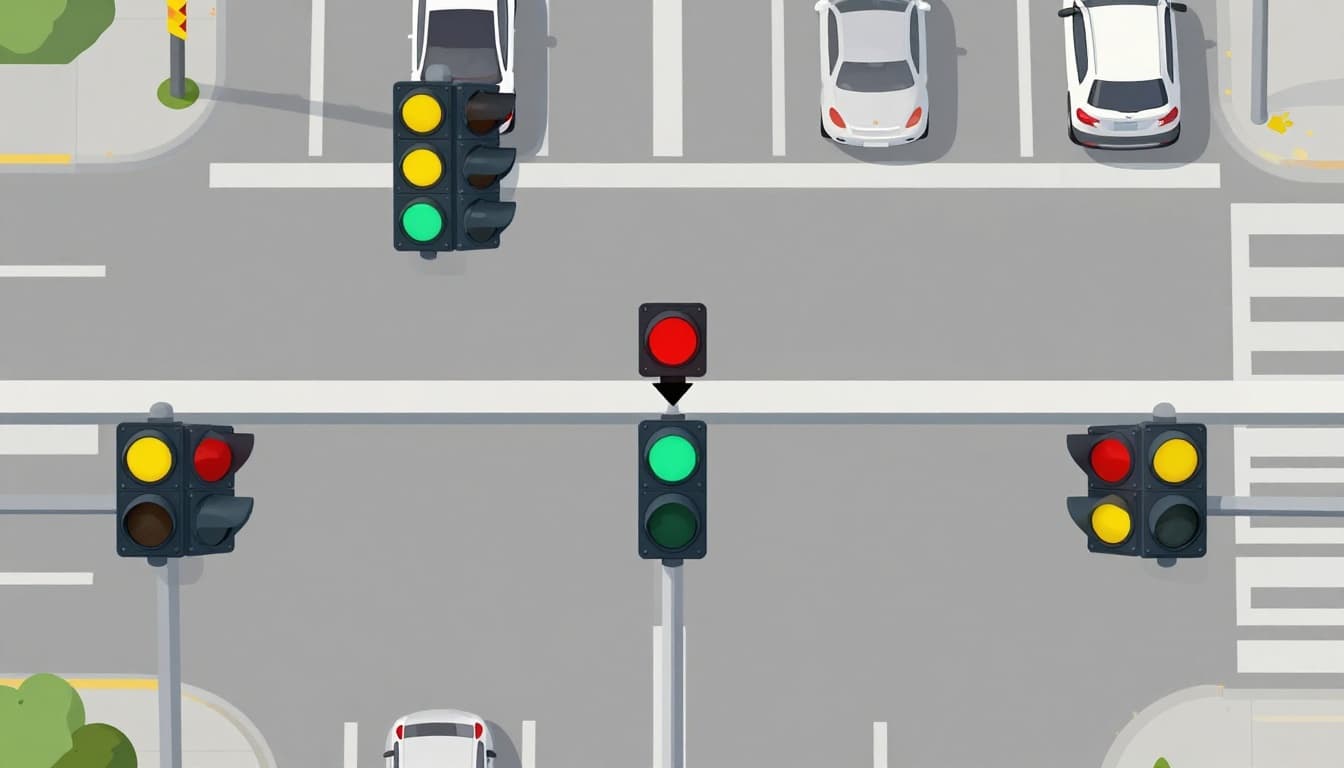
Traffic lights matter because intersections create natural conflict. Cars cross paths. Drivers turn across oncoming lanes. Pedestrians step into curb space where nothing is separated.
When signals coordinate those movements, they reduce surprise. They also control gaps, so drivers know when it’s safe to enter.
Safety benefits show up in multiple ways. First, signals prevent many collision patterns, especially those linked to red light running or uncontrolled turns. Second, signal timing can support pedestrian crossings by creating protected walk phases.
Also, not every “improvement” comes from signals alone. Still, better intersection control helps overall crash risk and keeps traffic from piling up into risky behaviors.
In the bigger picture, national crash deaths can still drop even as miles driven rise. The National Safety Council reported a decrease in 2025 vehicle crash fatalities in preliminary data, which shows progress on road safety overall: NSC preliminary data on crash deaths.
That progress often involves many tools, but traffic signals are one of the most visible.
Proven Wins in Road Safety and Lives Saved
Intersections are where many serious crashes happen. That makes timing and signal design important, especially for people on foot and on bikes.
When a light includes safe pedestrian phases, it limits the number of moments where someone has to “judge a gap” while cars move fast. Countdown indicators can reduce rushed crossings too.
Smart signal upgrades also help by managing changes more smoothly. Fewer sudden queues can mean fewer distracted stops and fewer late braking moments.
Even small timing fixes can prevent the kind of conflict you only notice after a crash.
Smoother Rides: How They Battle Traffic Jams Every Day
Jams often come from timing that does not match demand. A fixed-time system might give too much green to light traffic, then trap a bigger queue in the next cycle.
Adaptive and sensor-based systems can adjust in real time. Recent deployments have shown measurable improvements in multiple cities. For example, adaptive updates have been tied to reduced travel times and congestion in places like Detroit, Bellevue, and Norwalk.
Detroit updated hundreds of signals with adaptive control, with reports of congestion reductions and faster movement. Bellevue also reported large travel time drops after adding adaptive timing. Norwalk used adaptive signals at key commercial routes to ease recurring delays.
These results make sense. If your streets are like a heartbeat, sensors act like a pulse check. The controller adjusts rhythm so traffic keeps flowing.
Big Bucks Saved on Fuel, Time, and Wreck Repairs
Signals save money indirectly, but the impact adds up.
Less idling means less fuel burn at stops. More predictable timing also helps delivery routes. When traffic moves with fewer delays, travel time becomes easier to plan.
There’s also the cost of crashes. Even one serious wreck can mean medical bills, repairs, and lost work time. Fewer conflict moments can reduce the odds of expensive outcomes.
Lastly, modern signal systems can reduce future repair costs. Many agencies upgrade cabinets, add sensors, and improve LED heads to cut downtime. That keeps intersections from falling behind as traffic patterns change.
2026 and Beyond: Cool Tech Upgrades Turning Lights Super Smart
Traffic signals already work well. However, 2026 pushes them toward smarter behavior and better coordination.
One major trend is stronger real-time adaptation. Cameras and radar can estimate demand more accurately than older detectors. That can help shorten queues without starving side streets.
Another trend is connected coordination. Traffic centers can share data across corridors. If one intersection sees spillback, nearby signals can adjust to reduce chain reactions. This matters when buses, emergency vehicles, or special event traffic changes travel patterns.
Pedestrian and bike upgrades also continue. More cities use enhanced crossing indicators, better timing for crossing distance, and improved detection for people who need extra time.
On the standards side, the US Manual on Uniform Traffic Control Devices (MUTCD) guides signal rules. As of March 2026, the current MUTCD is the 11th Edition with Revision 1 from December 2025, and states work toward adoption timelines. For official guidance, see MUTCD guidance from FHWA.
So what’s “new” in everyday terms? You might notice:
- Lights that adapt more often during irregular surges
- Cleaner operations during rush hour and off-peak shifts
- Better protection for crossings with sensors and timing rules
- More planning for future vehicle needs
The goal stays the same. Signals should keep people safe and cut wasted waiting.
Conclusion
Traffic lights are more than three colors on a pole. They’re a coordinated system that turns sensors, timing logic, and safety rules into smooth intersection control.
You saw the history, from early signal experiments to today’s computer-based control. You also learned how the pieces work together, with sensors as the “eyes” and the controller as the “brain.” Then you followed one cycle and saw why safe phasing prevents conflicts.
With 2026 upgrades, signals are getting better at matching real traffic patterns. The next time you hit a red light, try noticing how the system is reacting. That small moment is really a safety plan in action.
What’s the most frustrating intersection you pass, and have you noticed if its timing feels different at certain times of day?