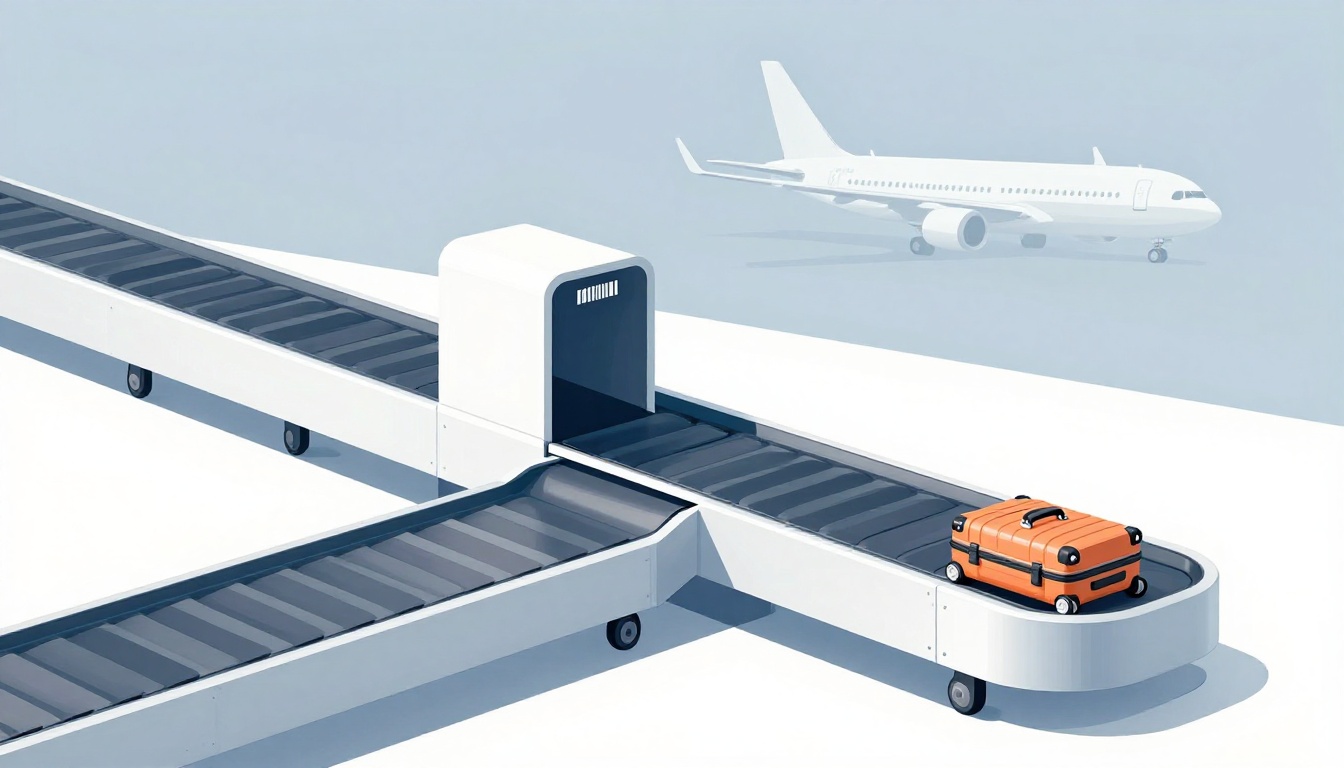
Ever grabbed your suitcase at baggage claim and thought, “Please, not this one”? You’re not alone. In 2024, airlines mishandled 6.3 bags per 1,000 passengers worldwide, and most “problems” show up as delays (not total loss).
Behind the scenes, airport baggage handling systems work hard to keep bags moving from check-in to the right plane. They use barcodes, scanners, conveyors, sorters, and tough safety checks, so your bag reaches the right destination even when flights run tight.
And if something goes off track, tracking helps crews spot the bag fast, reroute it, and get it back to you. That’s why understanding how the system works can calm your nerves, because you’ll know what’s happening with your bag.
We’ll break down how these behind-the-scenes systems get your bag from counter to carousel safely. Next, let’s look at the main parts that make the whole chain work.
Your Bag’s Big Journey: From Check-In Counter to Airplane Hold
Your bag’s day starts at the check-in counter. From that moment on, it’s like a traveling guest with an ID badge. Every system around you has one job: read that ID, keep it with the right flight, and make sure it shows up at the plane when it matters.
Tagging and Weighing at Check-In
First, you hand your bag over, and the airport immediately turns it into data. Agents or self-service kiosks weigh the suitcase, then print and attach a tag with your flight details. That tag usually includes a barcode, and it may also use RFID.
Here’s the simple difference:
- Barcode: Your bag gets a visible code the scanners must “see” at the right angle.
- RFID: Your bag can be read even if the tag is hidden inside a tangle of luggage or facing the wrong way.
Once the tag is on, your bag heads toward conveyors. In self-service setups, you can often place the bag and scan or confirm details faster. As a result, the line moves sooner, and your bag starts rolling while you still finish check-in.
From your bag’s point of view, this step feels like getting a wristband. It’s the only thing that really matters next.
Tip for travelers: use a durable tag holder and keep your bag tag flat and clean. It helps scanners read it quickly.
Screening for Safety Without Slowing You Down
Next comes security. Your bag rides into X-ray or EDS systems (sometimes both). Computers then flag suspicious shapes, densities, or patterns. If anything looks off, staff can open the bag, test items, or do extra checks.
In the US, post-9/11 rules changed how airports run checked baggage screening. Many airports use policies and processes built around TSA requirements, including checked baggage inspection systems and updated checkpoint planning guidance. For a sense of how TSA structures checked-bag screening equipment and checkpoints, see TSA checked baggage inspection system updates.
When your bag is cleared, it rejoins the flow. If it’s not, it goes into a held path until staff resolve the issue. Either way, the goal stays the same: safety first, then speed.
Sorting Magic: Getting Bags to the Right Flight
Now the real “transport map” begins. Scanners read the tag as your bag moves along the line. A computer decides where it should go, then directs it through the right belts and trays.
Think of it like a train station with one rule: each ticket must match the track. High-speed sorters help keep up with tight turnarounds. Systems like tilt-tray loops can handle many bag sizes, then flip bags into the correct flight stream. For examples of tilt-tray sortation systems, check BEUMER tilt-tray loop sortation.
From your bag’s point of view, this is the moment it stops being “any bag” and becomes “Bag to Flight 237.”
Final Prep: Makeup and Loading for Flight
Last stop: make-up. Bags for each flight gather in group areas, often based on their destination and aircraft loading plan. Workers reconcile what’s arriving with what should be on the manifest.
Then your bag gets placed into ULDs (Unit Load Devices) or onto carts. Tugs move those units to the aircraft, where loaders slide them into the cargo hold. Balancing matters here. Too much weight in one area can harm safe handling.
Finally, baggage reconciliation checks again. The system cross-checks counts and flight details so the right bags board the right plane.
Tip for travelers: pack things you can replace easily at the last minute, and keep receipts handy. If your bag ever goes into a hold, clear notes and smooth communication speed up resolution. Tool Call: generateImage with input: {“prompt”:”Modern illustration of airport baggage sortation with an overhead scan point showing a tilted tray diverter and a small sensor beam reading a tag on a suitcase, clean simple shapes, controlled blue gray and orange colors, strong diagonal composition that suggests flow into multiple lanes, exactly three suitcases, one on tilted tray about to divert, overhead perspective, bright even lighting, no people no text no logos no watermarks no extra objects.”,”aspectRatio”:”landscape”,”sectionTitle”:”Smart Sorters and Scanners Reading Every Tag”,”imageIntent”:”show tilt-tray sorting and scanner reading behavior for accuracy and busy-time performance”}## The Workhorses: Key Components Powering Baggage Systems
In a baggage system, reliability beats speed myths every time. Your bag moves because machines keep steady contact, tight spacing, and clear orientation. Think of the path like an endless sidewalk in a busy subway, except the sidewalk must place each suitcase into the correct lane, on time, and in the right direction.
Conveyor Belts and Tracks That Never Stop Moving
Most airports start with conveyor belts. These belts act like the workhorse hallway, carrying bags from one zone to the next. They’re dependable, easy to control, and they keep flow moving even when staff change shifts. Still, belts alone can struggle when bags arrive at odd angles, different sizes, or close together.
That’s where advanced tray systems help. Instead of simply sliding bags along a flat surface, tray systems use individual carriers that hold each bag more firmly. Many designs guide bags onto trays, then move them through controlled sections like rails. As a result, the spacing stays more consistent, and bags keep a stable orientation when they approach scanners.
Spacing matters more than it sounds. If bags bunch up, scanners get partial views, and barcode reads can fail. With belts, bags can drift, rotate, or bump into each other. Meanwhile, tray systems reduce that “jostling chaos” by controlling each bag’s movement with more structure. In short, good spacing prevents scanner fails.
Orientation matters too. A barcode tag works best when it faces the scanner at the right angle. Tray systems often keep tags steadier, so the scanner “sees” the same area each time. Belts can still work, but the system needs stronger controls, like fixed guide rails and tighter belt speed matching.
You’ll also see belts paired with transition zones, where the system slows briefly, then returns to full speed. That small change helps bags settle before they hit the next sort stage. For an example of how airports select and design conveyor systems, see conveyor belt basics for airports.

Smart Sorters and Scanners Reading Every Tag
Now the system makes its decisions. Conveyors keep bags moving, but sorters and scanners decide where each bag goes next. This stage works like a high-speed toll gate: the tag gets read, the system checks the flight plan, and a diverter sends the bag into the right lane.
A common approach uses tilt-tray sorters. The tray rotates or tilts at just the right moment, nudging the bag off the main line and into an exit chute. Precision timing does the heavy lifting here. Because trays can position bags consistently, the diverter can “aim” more accurately. You can see tilt-tray designs used for high-capacity airport sorting in products like VarioTiltTray baggage sortation.
In addition, many systems run ICS (Independent Carrier System) for busy airports. ICS keeps bags on individual carriers through sections of the network. That helps reduce jams when luggage mixes sizes and weights. It also supports tight timing between scan points and diverters. If you’re comparing loop-style systems to ICS, this overview on why ICS can be a strong alternative explains the tradeoffs in plain terms.
Scanners read tags in two main ways: barcode and RFID. Barcodes depend on a clear view. The scanner needs good lighting, a clean tag, and the right angle. RFID changes the game. With RFID, the system can read tags even when the bag shifts position, because it does not require line-of-sight. That matters when bags sit under other bags or face sideways.
Accuracy also depends on how the system handles high traffic. During peak times, bags arrive faster, and minor delays can stack up. Strong scan setups compensate by using consistent scan zones, fast decision logic, and quick diverter actuation. As a result, the sorter doesn’t just “try harder,” it reads and routes with less guesswork.
Here’s the practical takeaway: the best systems use smart control to keep tags readable, even when bags crowd the lanes. Some airports have rolled out RFID tagging for easier reads, like Las Vegas airport’s RFID baggage-tag plans.

2026 Tech Upgrades Making Lost Bags a Thing of the Past
Lost bags used to feel like a mystery, but 2026 upgrades turn that mystery into a log file. Instead of “maybe your bag is somewhere,” systems start saying, “Your bag is here, and it’s on the right plan.”
The biggest shift is simple: airports and handlers are moving from tag reading to bag knowing. Then they add smart warnings when something drifts off path.
RFID with richer passenger-level details (not just a tag ID)
RFID is the headline upgrade, but the change that matters most is what happens after the read. Many newer deployments aim to pair RFID with flight context so the system can confirm bag-to-flight fit quickly, even when a tag sits in a tricky spot.
Why does that reduce lost bags? Because it cuts the “late discovery” problem. A barcode read can fail if the tag faces the wrong way. RFID reads through messier angles, so the system can keep routing correct bags without waiting for a manual check.
Think of it like this: barcodes are like reading a license plate from across the street. RFID is like having a friend with a perfect memory who can still identify you in a crowd.
And when passenger-level details ride along with the bag record, auto-check systems can reconcile faster. As a result, fewer bags get mixed into the wrong loading group, especially during connection chaos.
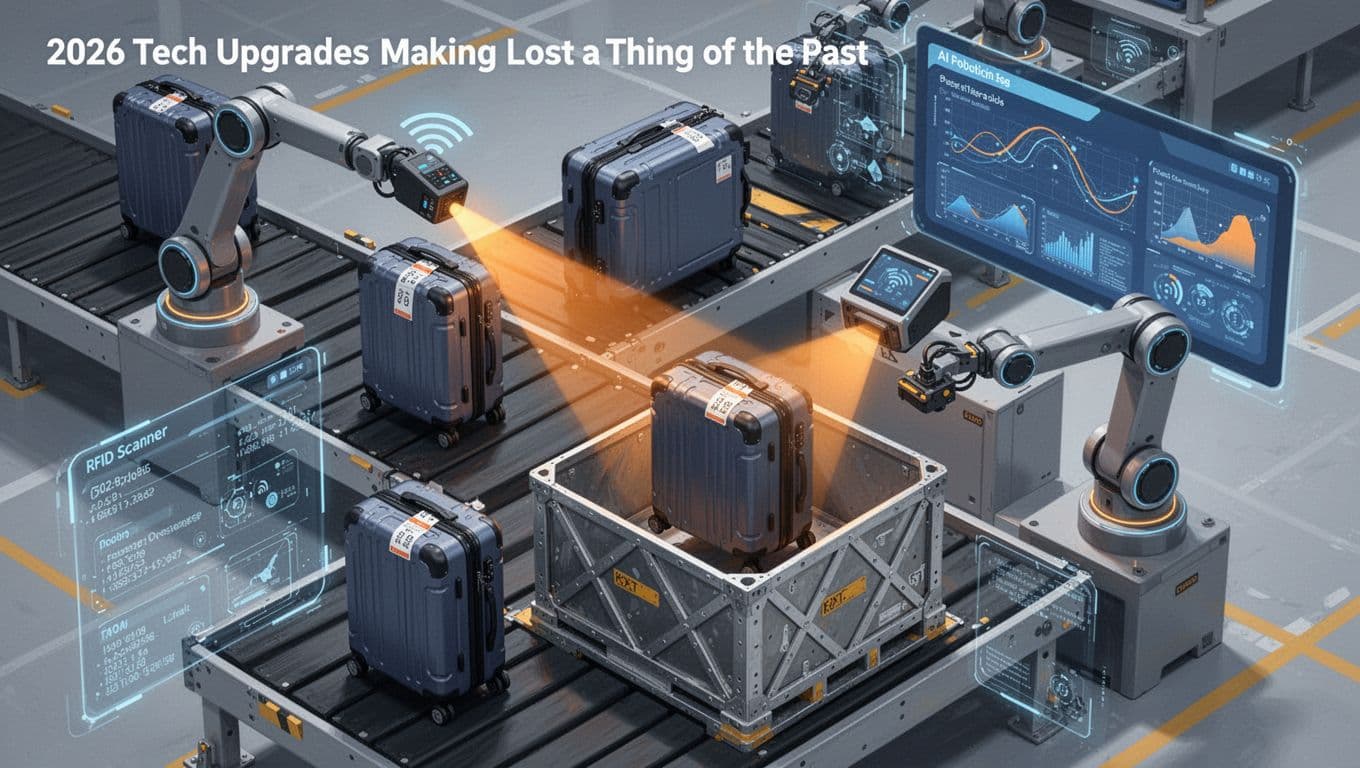
AI predictions, robotics for peak hours, and auto-reconciliation alarms
Next comes the real-time brain. AI uses live scan events, flight timing, and past congestion patterns to predict trouble before it turns into delays or misloads. If a sorting lane slows down, the system can adjust flow and keep bags aligned.
Robotics then handles the “busy-hour slam.” Self-service drops and automated loading aids can cut manual touches when volume spikes. Meanwhile, in-container screening tools and inline checks help handle items without pulling bags out of the main route as often.
Finally, auto-reconciliation alarms act like a smoke detector for baggage flow. When bag counts or routing data don’t match a flight plan, the system alerts staff with the exact mismatch. That means fewer bags “go missing” in practice, because the hold or reroute happens sooner.
For an example of how predictive analytics support earlier warnings in baggage disruptions, see SITA Bag Radar and predictive baggage analytics. Tool Call: generateImage with input: {“prompt”:”Modern illustration of an airport transfer hallway showing luggage moving between two connected conveyor paths, one suitcase on a handoff platform near a scanner gate, arrows suggesting multiple routes, clean shapes, controlled blue gray and orange palette, strong depth perspective, exactly three suitcases, no people no text no logos no watermarks no extra objects.”,”aspectRatio”:”landscape”,”sectionTitle”:”Why Bags Get Lost and How Transfers Are the Riskiest Spot”,”imageIntent”:”visualize transfer handoff points where luggage gets rerouted”}## Real Struggles Airports Battle and Clever Fixes
Airports don’t lose bags because people stop caring. Most problems start where the system must switch gears fast. One missed connection, one awkward bag angle, one jamged lane, and the whole chain slows.
Transfers often get blamed first, and for good reason. In those moments, your bag moves from one plan to another, like a baton pass in a sprint relay. If the handoff timing slips, the bag can end up in the wrong queue.
Why Bags Get Lost and How Transfers Are the Riskiest Spot
Transfers create extra handoffs, so they carry extra risk. In practice, about 41% of mishandled baggage comes from transfers. That makes sense when you picture a bag leaving one process, then entering a new one under a new time window.
What usually goes wrong? It’s rarely a single failure. It’s more like a chain of small frictions:
- A quick switch is required because your flight changed gates or your inbound bag arrived late.
- A tag gets scanned with a partial read, especially when the label faces away from the scanner.
- A bag enters a temporary buffer while staff reconcile counts and flight details.
- Then the bag gets pushed back into the flow, but the routing decision might lag behind the reality on the ground.
Here’s the key point: many “lost” bags are not truly lost. Often, they’re just unfound for a while. When the airport’s systems notice the mismatch early, the bag returns to the right path quickly.
RFID helps because it reduces one of the biggest headaches: orientation. Barcodes want the label to be visible. RFID can read the tag even when it’s tucked under the handle or angled at an odd tilt. That means fewer “scanner missed it” moments, especially when bags stack up during rush hours.
Also, tracking systems help workers spot where the bag should be. For a look at how stronger baggage tracking reduces mishandled outcomes, see SITA updates on tech-driven baggage improvements.

If you’re trying to protect your own bag during a connection, pack like the system might need extra seconds. Keep your tag readable, and remove bulky tag covers. Also, leave a little buffer time when possible, because the tightest windows usually create the riskiest transfers.
Beating Jams and Rushes with Smart Design
Jams don’t happen because one suitcase becomes “bad.” Instead, they happen because real bags come in all shapes, sizes, and packing styles. Some bags are soft-sided, some are rigid, and some arrive close together, like umbrellas packed in a hallway. When the system can’t keep stable spacing, scans get messy and routing decisions slow down.
So how do airports fight back? They design the flow so bags behave more like a tidy line than a pile of laundry.
First, orientation fixes reduce scan failures. Systems guide bags onto carriers that help tags face the right direction more often. Even small improvements matter because scanners work best when tags stay in predictable spots.
Next comes ICS no-jam technology. Independent Carrier Systems move bags on individual carriers rather than letting every bag fight for space on a shared belt. The result is more consistent spacing and fewer “domino” delays when one lane slows down. If you want a practical explanation of why ICS can reduce mishandled inbound baggage, read how ICS reduces mishandled inbound baggage.
Then, airports use AI for crowd and congestion timing. The idea is simple: when loads spike, the system predicts where pressure will build. After that, it adjusts scan timing, buffer use, and routing rules so the sorter doesn’t get overwhelmed. In other words, it acts like a good traffic controller, not just a fast driver.
Here’s what you can do as a traveler, since you’re part of the system too:
- Secure your tag so it stays flat and uncovered.
- Pack heavy items low so bags don’t tip and crush tags.
- Avoid bag accessories that flop against the label area (front straps and dangling keychains can shift tags).
- For tight connections, bring a change of clothes in your carry-on, just in case you land in the “delayed-not-lost” group.
The bottom line is reassuring: airports keep improving how they manage transfers and peaks. When the system reads tags more reliably and routes with better timing, fewer bags end up stuck waiting for humans to fix the gap. Tool Call: generateImage with input: {“prompt”:”Modern illustration style showing a large airport baggage handling area with an overhead view of multiple conveyor lanes and scanner portals, suitcase-sized luggage carriers moving toward labeled flight loading zones (no readable text), clean shapes, controlled muted blue gray and orange palette, strong perspective depth, no people, no logos, no watermarks”,”aspectRatio”:”landscape”,”sectionTitle”:”Big Airports Nailing Baggage Handling Today”,”imageIntent”:”show scale and complexity of a high-capacity baggage handling system at a major airport”},”sectionTitle”:”Big Airports Nailing Baggage Handling Today”,”imageIntent”:”show scale and complexity of a high-capacity baggage handling system at a major airport”}## Big Airports Nailing Baggage Handling Today
Big airports win the baggage race with one thing travelers rarely see: tight timing across many machines. When the system works, each bag behaves like it has a schedule, not a hope. That takes real scale, strong controls, and constant re-checking as the bag moves.

Inline screening plus baggage flow control at US hubs
At large US hubs, baggage handling does not start in the cargo area. It starts at the counter, then it moves into inline screening systems, where checked bags go through CBIS or EDS setups before sortation ramps up. When those steps connect well, fewer bags need to “pause” for manual review.
For example, some large terminals at airports such as ATL (Atlanta) and DFW (Dallas/Fort Worth) use upgraded back-end workflows to reduce bottlenecks during peaks. Atlanta also pushes automation and infrastructure changes tied to baggage throughput, including ramp and operations upgrades, which matter because bags must stay aligned with flight departures. See how Atlanta is updating the journey end to end in Atlanta rewrites the baggage journey with reclaim, SITA.
Meanwhile, SFO (San Francisco International) is a notable US example for tote-based independent carrier approaches that keep bags in better order through screening and routing. BEUMER Group’s CrisBag ICS started operations at SFO’s Harvey Milk Terminal 1. That move matters because it keeps each bag’s path more predictable when volume rises. Read the rollout coverage in Beumer’s ICS baggage handling system starts operations at SFO.
Why millions of bags work better with independent carriers
Once airports reach the “tens of millions” per year zone, the weak links show up fast. That’s why many upgrades focus on bag-to-path consistency, not just faster belts.
Independent carrier systems (ICS) help because they reduce mixing. Instead of bags sliding into each other, carriers keep spacing stable as tags get scanned. As a result, the system makes more confident decisions at each diverter point. BEUMER explains why airports choose ICS for baggage handling in Why airports are choosing ICS for their BHS.
In plain terms, think of it like traffic lanes. If every car shares one crowded road, crashes happen. If each car has its own lane, the flow stays smooth.
Auto-matching and reconciliation that catch problems early
Finally, big airports use reconciliation to confirm the bag record matches the flight record. Without this layer, a bag can be “somewhere” but not “where it should be.”
Systems like A-BRS focus on tracking, matching, and inventory across movements, using baggage messaging to keep counts aligned with what actually boarded. For an example of how that approach works, see A-BRS baggage reconciliation system.
Put together, the winning formula looks like this:
- Strong scan coverage at screening
- Better spacing from independent carriers
- Reconciliation that flags mismatches early
That combination is how big airports keep more bags on the right track, even when flights shift, weather hits, and crowds swell.
Conclusion
Airport baggage handling systems work because every bag turns into both a label and a live routing record. Then the system scans it, guides it through tight lanes, and checks counts again during loading. When something goes wrong, fast tracking helps teams find the bag and fix the route before it snowballs into a delay.
The strongest takeaway is simple: reliable bag-to-flight matching reduces mishandling. That’s why airports keep improving scan accuracy, smarter sorting controls, and reconciliation tools, even when volume spikes. The result is fewer “lost” reports, more bags reunited quickly, and less uncertainty for travelers.
Want better outcomes on your next trip? Share your own lost bag story in the comments, and note what helped (or hurt). Also, pack with a plan, keep your tag easy to scan, and add a spare contact detail inside your bag. As AI and automation roll forward toward 2030, airport systems should get even better at predicting trouble early and returning your bag faster.